
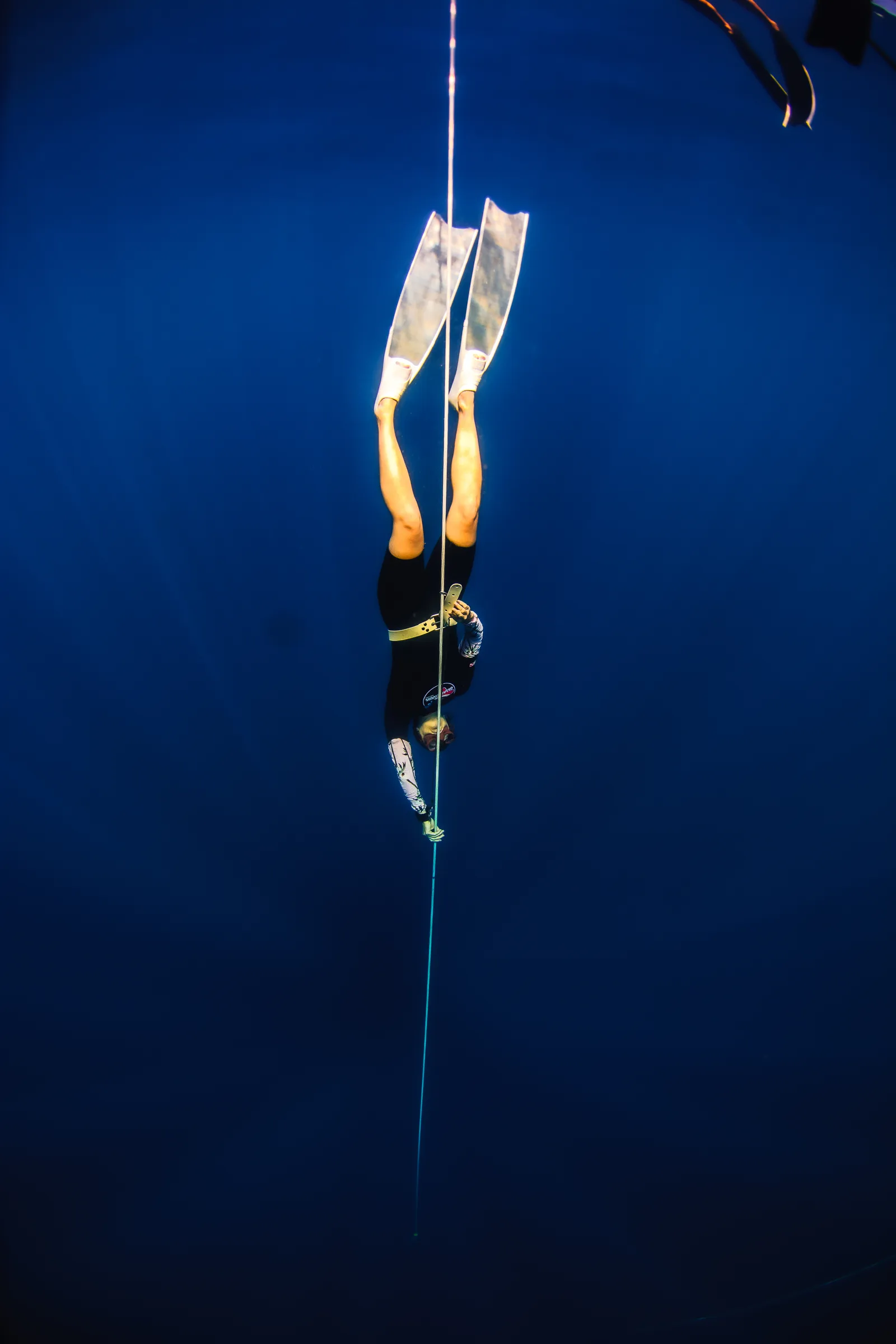
Ask any freediving instructor what stops beginners, and the answer is rarely breath. It is ears. Somewhere between 5 and 15 metres, the pressure builds, the ears do not clear, and the dive ends. The good news: equalisation is a technique, not a gift. Here is how it works.
In short
- Valsalva (pinch and blow) uses the lungs and chest; it gets harder head-down and deeper.
- Frenzel uses the tongue as a small piston; it is the standard freediving technique.
- Golden rule: equalise early and often, and never force. If it does not clear, go up a little.
What is happening in your ears
As you descend, the water pressure increases and pushes on your eardrum from the outside. To balance it, you need to send a little air from your throat into the middle ear, through the Eustachian tubes. If you do not, the eardrum bends inward, which first feels like pressure, then like pain. Pain is your signal to stop, not to push harder.
Valsalva: the plane technique
Most people know the Valsalva: pinch your nose and blow gently. It works for scuba, where you are usually upright and breathing from a tank. In freediving it has two problems:
- It uses the chest and diaphragm to push air, which costs effort and oxygen.
- Head-down and deeper, your lungs are compressed and the air is harder to push up. Many freedivers find the Valsalva stops working somewhere around 10 to 15 metres.
Frenzel: the freediver’s technique
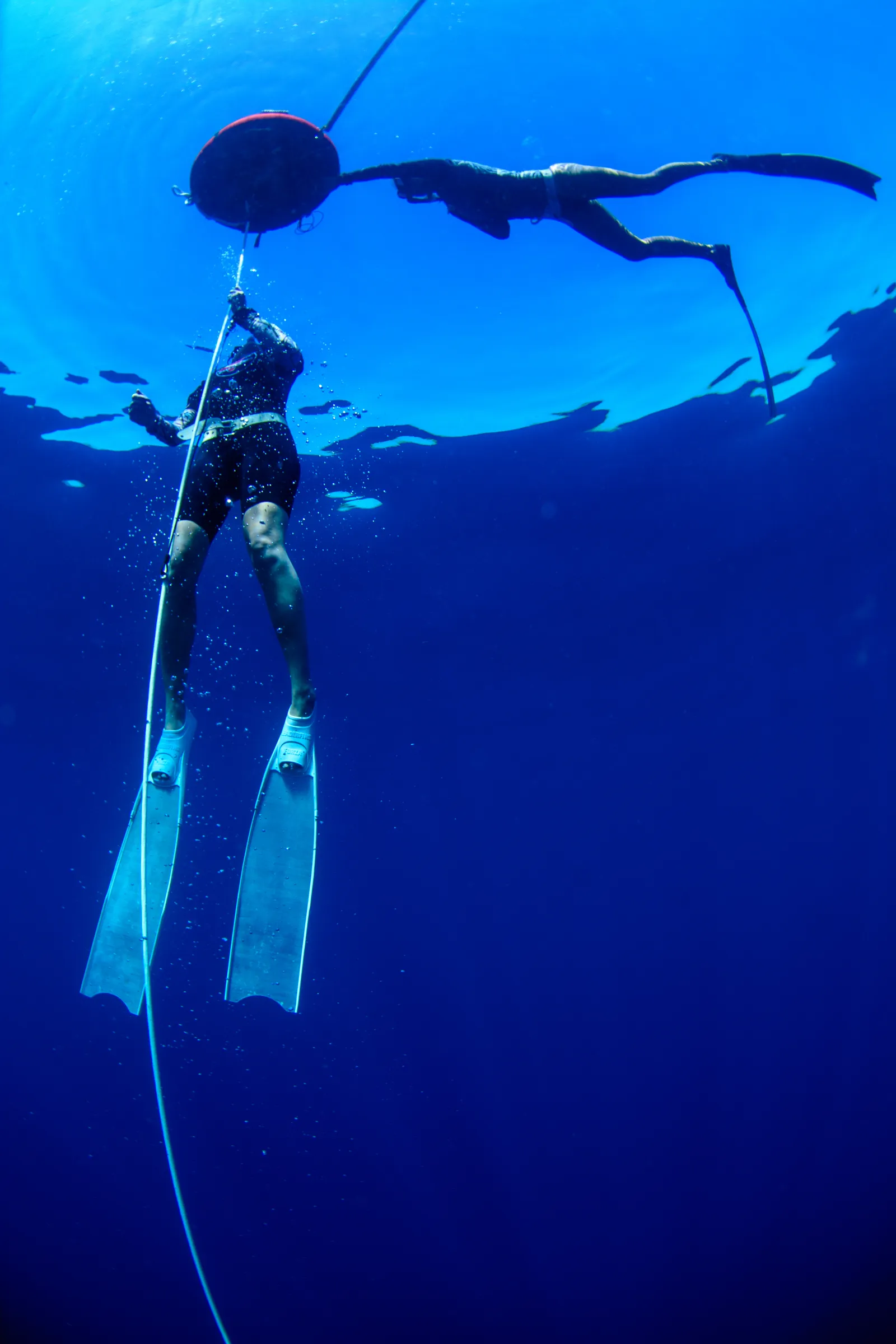
The Frenzel uses only the air already in your mouth and nose, moved by your tongue. With the back of your throat closed (as if holding your breath to lift something heavy), the tongue rises and pushes backward like a piston, sending a small puff of air into the Eustachian tubes. Small effort, no chest involvement, and it works head-down.
A simple drill on land
- Pinch your nose and fill your cheeks with a little air.
- Close the back of your throat, as if you were about to lift a heavy box.
- Push your tongue up and back, as if saying a silent “K” or “T”.
- You should feel a gentle click or pressure in both ears.
It feels awkward at first. That is normal. A few minutes a day for a week makes a real difference, and it is much easier to learn sitting on the sofa than at 10 metres.
Mouthfill: for later
Beyond about 30 metres, the air in your lungs becomes so compressed that even the Frenzel runs out of air to work with. Experienced freedivers then use the mouthfill: they load air into the mouth at a certain depth and use it for the rest of the descent. It belongs to advanced training and coaching, not to your first course, but it shows that every depth has its technique.
Habits that keep ears happy
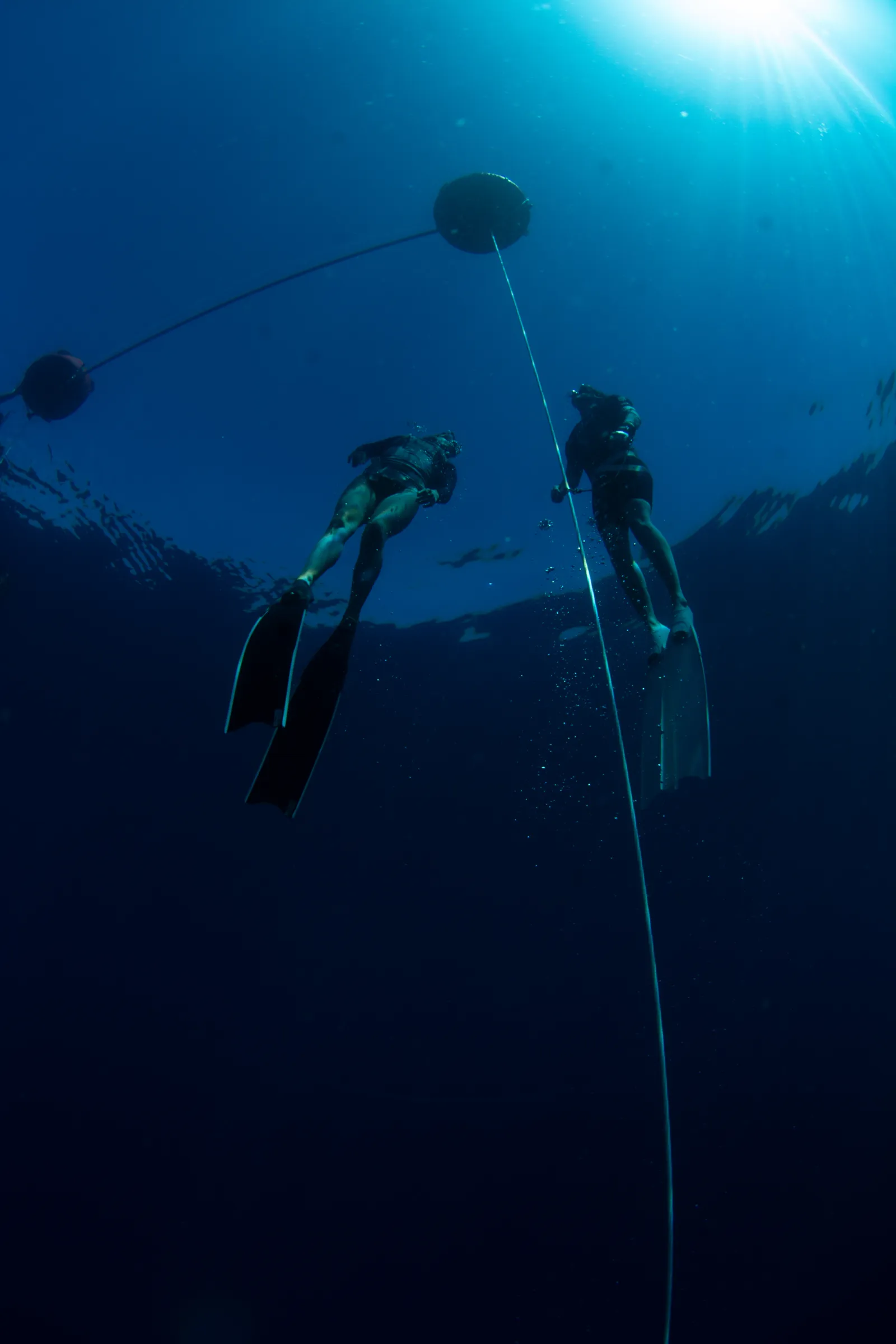
- Equalise early and often: before you feel pressure, every metre or so at the start.
- Head position: keep your chin slightly tucked, neck relaxed. A tense neck closes the tubes.
- Descend slowly at first. Speed comes later.
- Never force. If an ear will not clear, stop, go up a metre or two, try again gently. If it still refuses, end the dive.
- No diving with a cold or blocked sinuses. Postpone.
How we teach it on Gili Air
The Freediving Trial introduces equalisation in the pool. SSI Freediving Level 1 includes a long Frenzel session on day one, and most students who arrive convinced they “can’t equalise” leave able to clear past 15 metres. Level 2 adds Advanced Frenzel for depths beyond 20 metres. And if your ears are your personal wall, a coaching session is built around exactly that: we find the depth where it breaks down and rebuild from there.
Worried your ears are not made for this? Read is freediving for me?, then message us on WhatsApp or at freedivegiliair@gmail.com.
Keep reading
Beyond Frenzel: hands-free, mouthfill and reverse packing
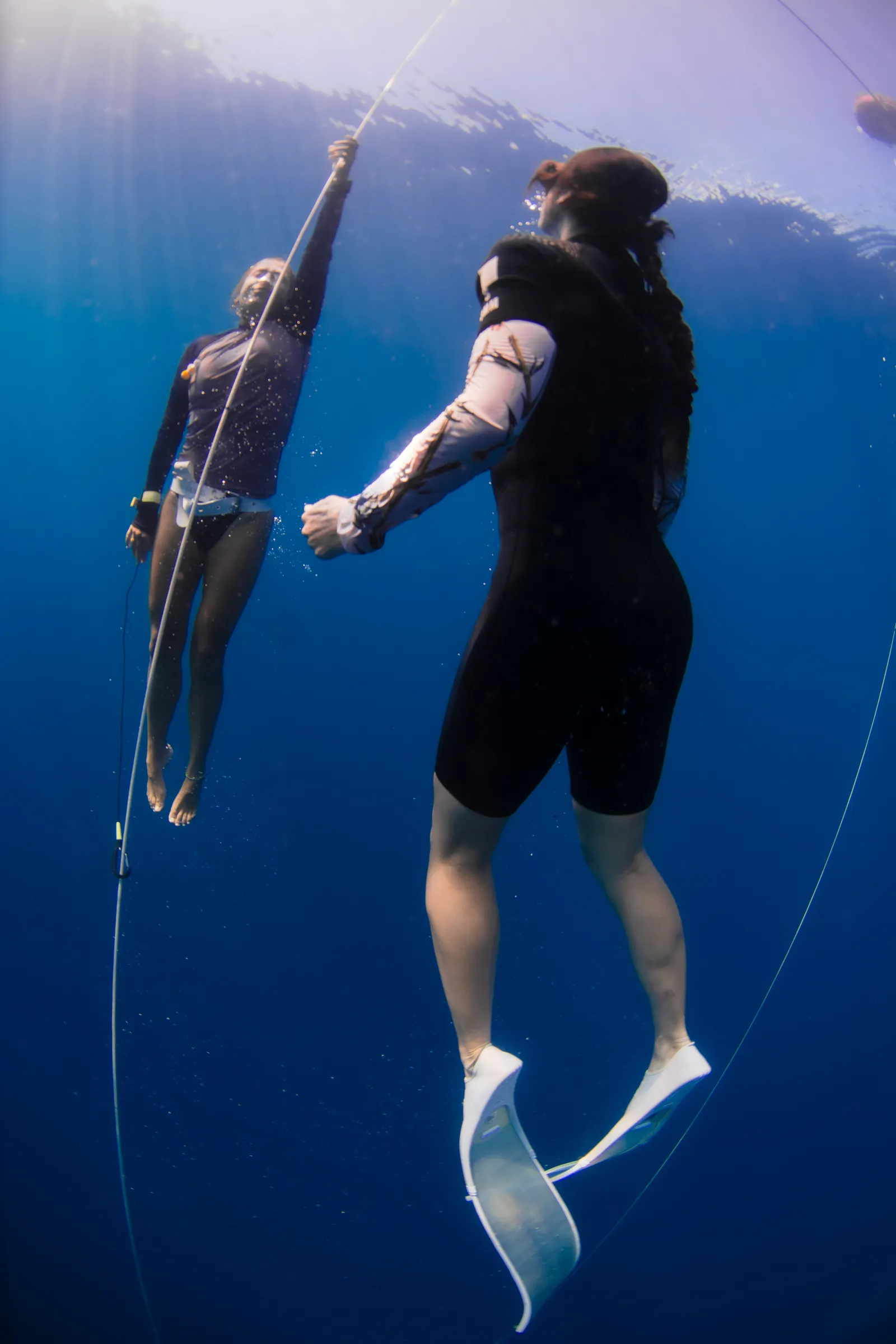
Freediving safety: why you never dive alone
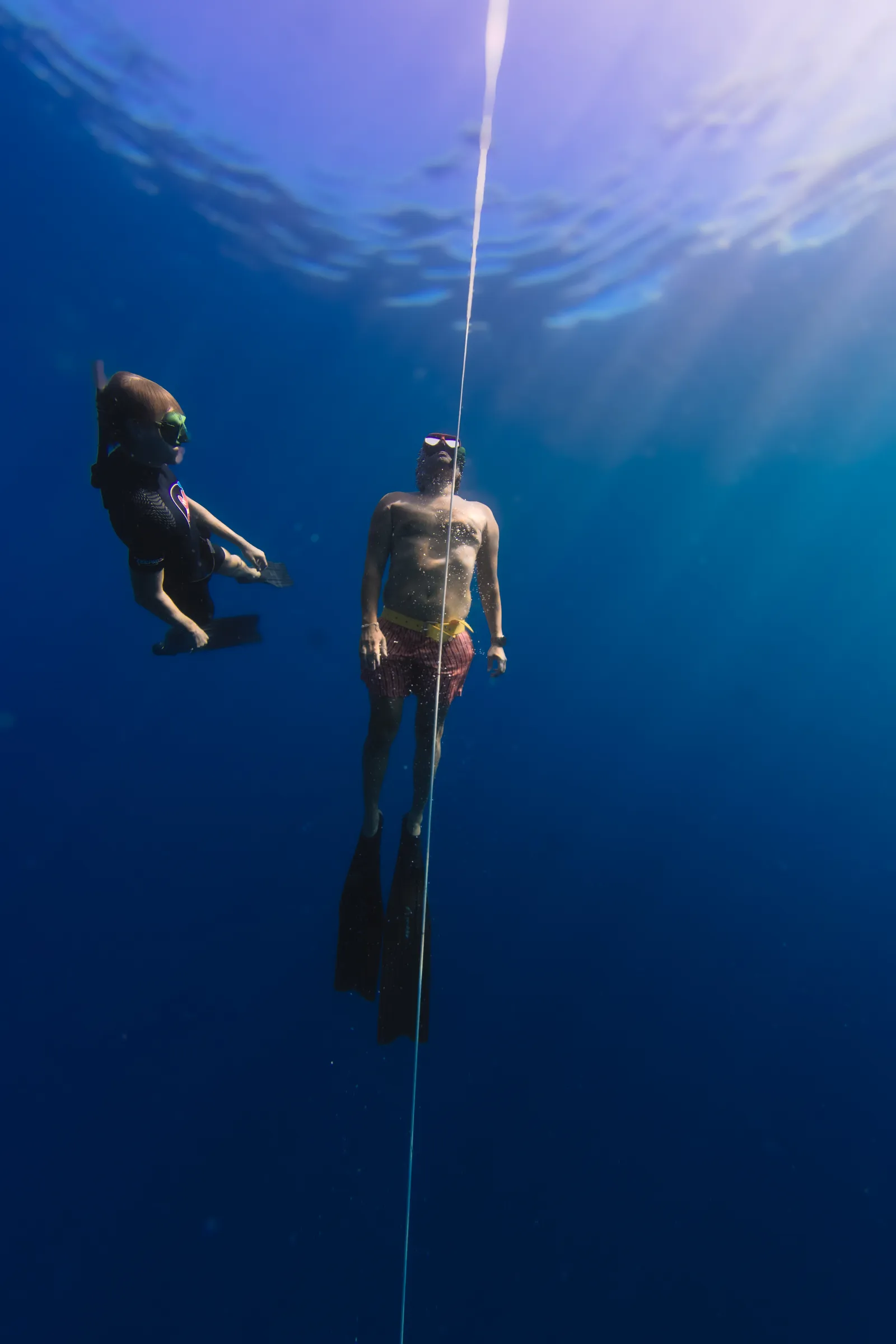
Is freediving for me? An honest answer
Freediving or scuba diving: which one is for you?

When is the best time to freedive on Gili Air?
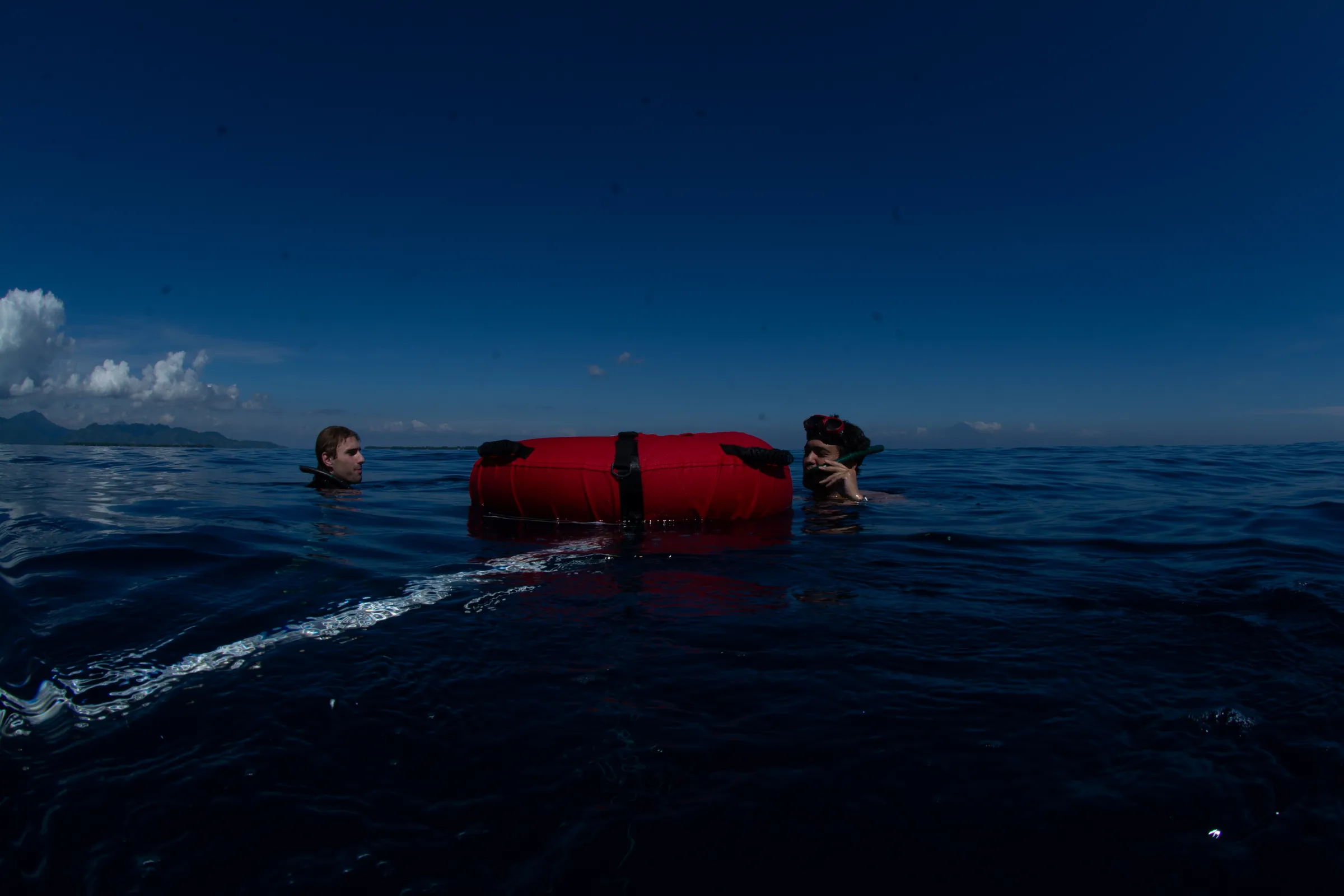
Freediving in Indonesia: where to go, and for whom
A freediving training week on Gili Air

Freediving with turtles on Gili Air

Your first time diving: what a try dive on Gili Air is really like
