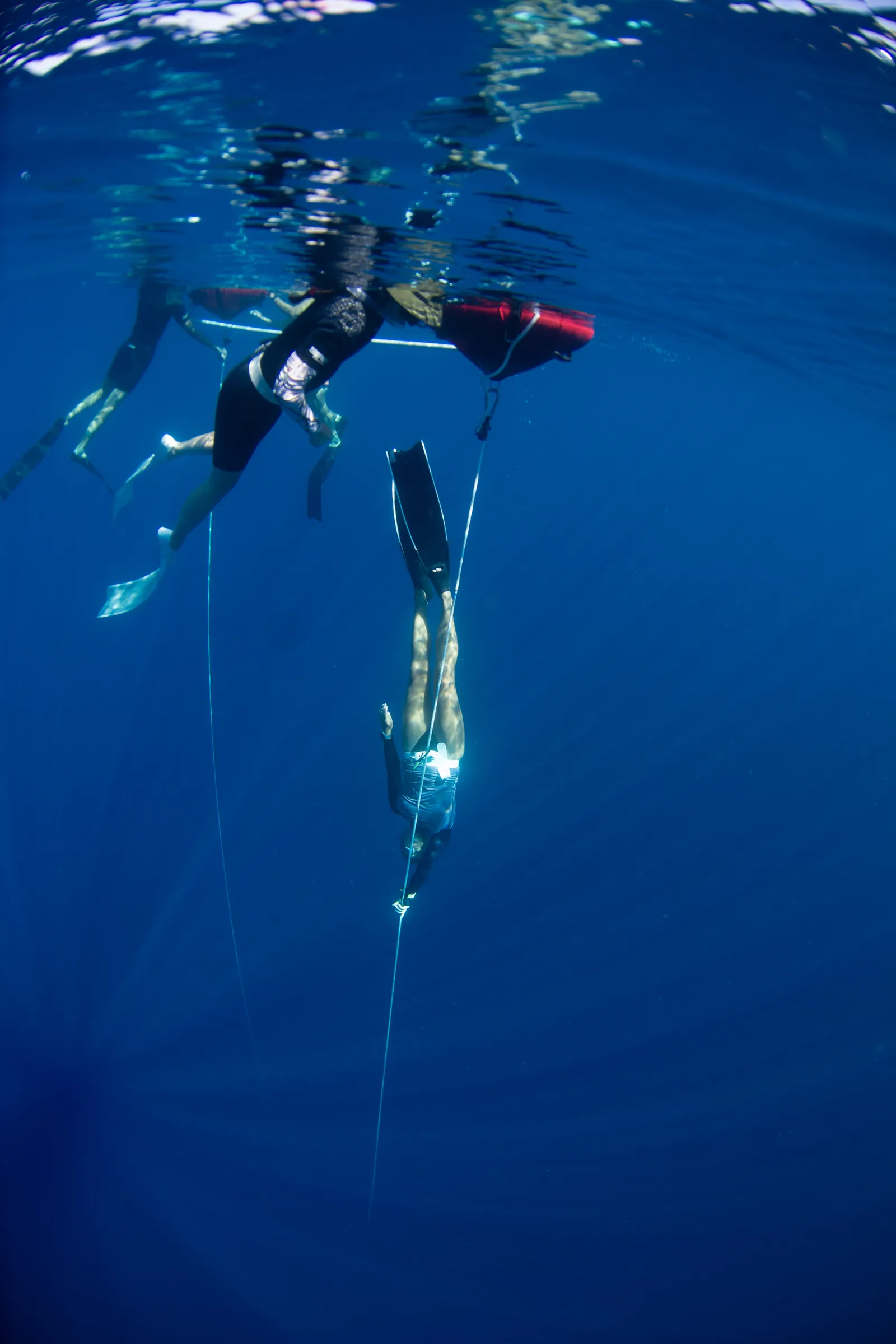

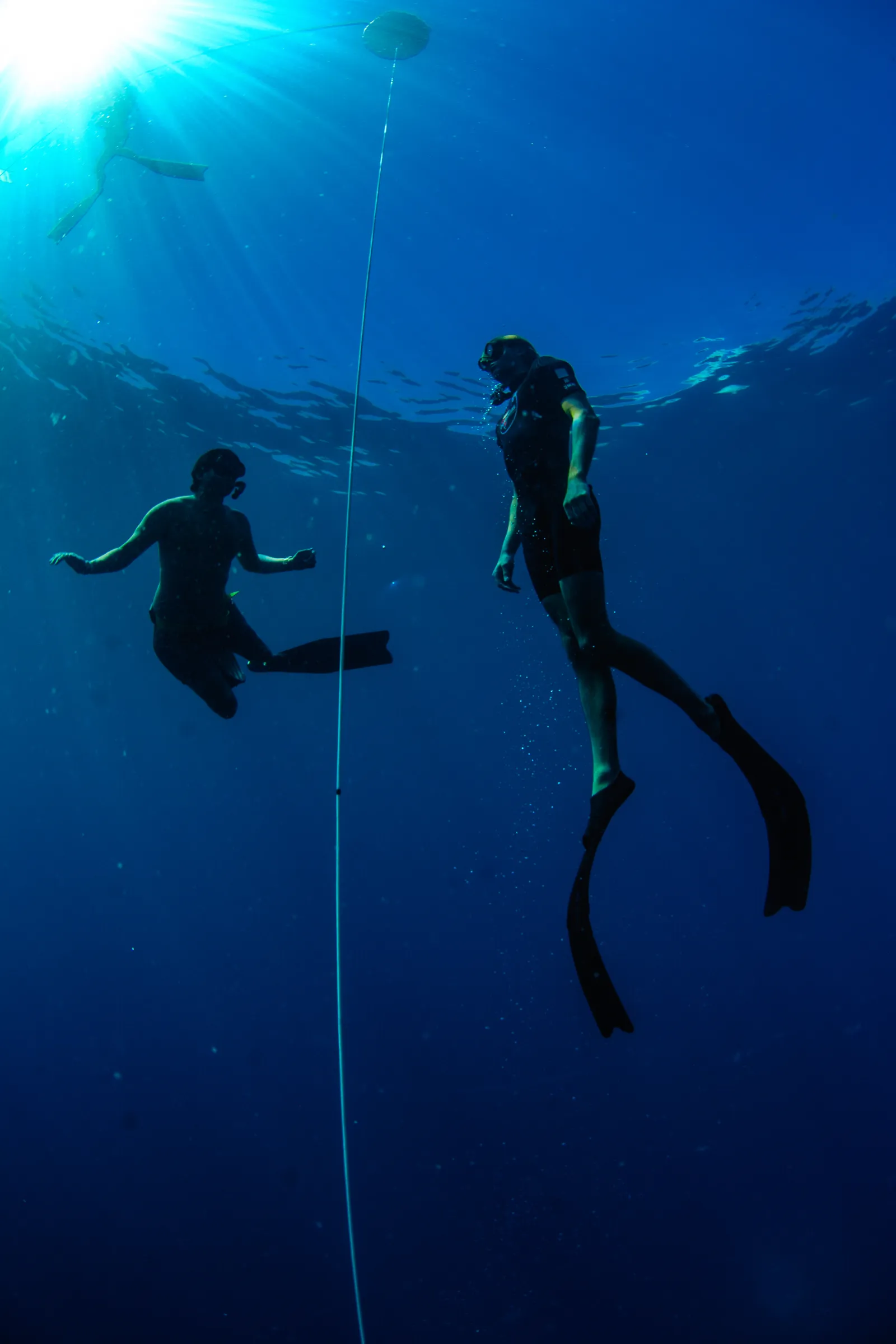
Gili Air is famous for its turtles. Snorkellers see them from above, scuba divers see them through a cloud of bubbles. Freedivers have a special place in between: at their level, in silence. Many of our students say their first real turtle encounter on one breath was the moment freediving clicked for them.
In short
- Green and hawksbill turtles feed on the reefs around all three Gili Islands, all year.
- Freedivers get closer because they make no bubbles and no noise.
- The rule: two metres away, never touch, never chase, never block their way to the surface.
Why turtles tolerate freedivers
Turtles react to noise and sudden movement. A scuba diver breathes out a stream of bubbles every few seconds; a freediver makes no sound at all. Slow, streamlined, holding your breath like the turtle itself, you become just another calm animal on the reef. Turtles often keep grazing as you glide past, sometimes they even look at you with the same curiosity.
Two species to look for
- Green turtle (Chelonia mydas): the most common. Rounded head, smooth shell, often grazing algae on coral heads like a cow in a field.
- Hawksbill turtle (Eretmochelys imbricata): smaller, with a pointed beak and a beautifully patterned shell. Often found picking sponges from cracks in the reef.
Our article on green turtles in the Gili Islands explains how to tell them apart and how they live.

Where to find them
Turtles are everywhere around the Gilis, and most of our freediving outings include at least one encounter. They like:
- The reef edge, where the shallow reef flat tips into the blue, the same zone our snorkeling guide recommends.
- Coral heads and cleaning stations, where small fish pick parasites from their shell.
- Calm, shallow sites between 5 and 15 metres, exactly the depths of a trial or a Level 1 course.

How to approach a turtle on one breath
- Breathe calmly at the surface first. Never chase a turtle on a rushed breath.
- Duck-dive quietly, a little away from the turtle, not on top of it.
- Approach from the side, slowly, never from above or head-on.
- Stop at two metres. Let the turtle decide if it wants to come closer.
- Never block its way up. Turtles breathe air like you. If a turtle starts to rise, move aside and let it surface.
- Never touch, never chase, and never disturb a turtle resting or at a cleaning station.
Respecting this distance is not only good for the turtle. It also gives you the best encounters, because a relaxed turtle stays and goes on with its life in front of you.
Photos and video
A small action camera on one breath can give stunning images: the turtle, the light, the blue behind. Keep it simple: wide angle, shoot slightly upward toward the surface, and let the turtle come into the frame rather than following it. Our GoPro settings for the Gili Islands work for freediving too.
Your first turtle on one breath
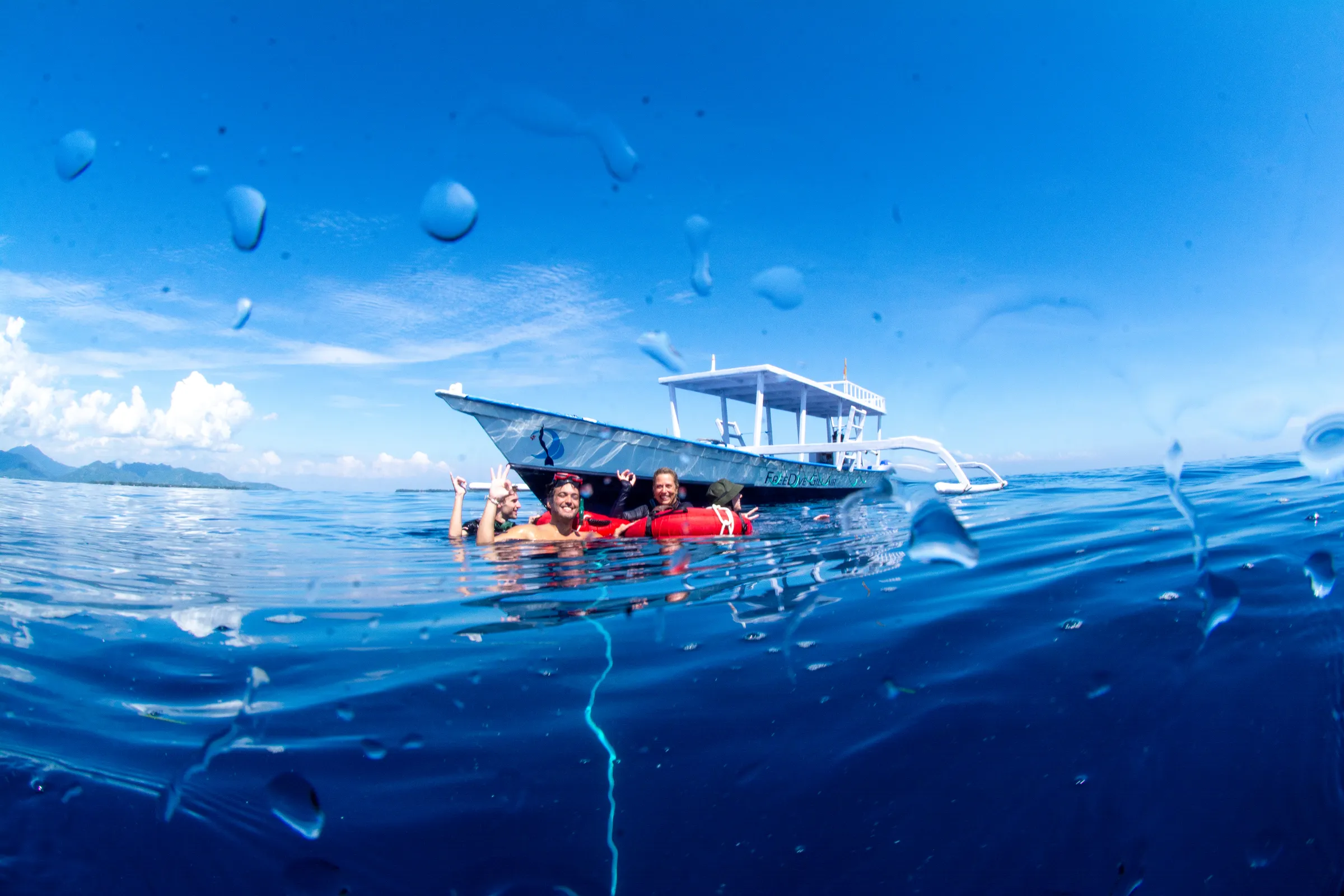
The Freediving Trial takes you to calm, shallow sites where turtles are common, with an instructor next to you. After SSI Freediving Level 1, you have the breath-hold, the equalisation and the buddy skills to explore the reef on one breath with a certified partner. Want to know what the first session looks like? Read your first freediving trial, step by step.
Message us on WhatsApp or at freedivegiliair@gmail.com: we will tell you where the turtles were this week.
Keep reading

Green Sea Turtles of the Gili Islands — Everything You Need to Know Before You Dive
When is the best time to freedive on Gili Air?
Your first freediving trial on Gili Air, step by step
Freediving on Gili Air: the complete guide
A freediving training week on Gili Air
The Indonesian Throughflow: the ocean current shaping every dive at the Gilis

Snorkeling Gili Air — turtles, the three-island boat trip, and when to try a dive
Diving Gili Air month by month
Macro season is back on Gili Air: photographers, this is your moment