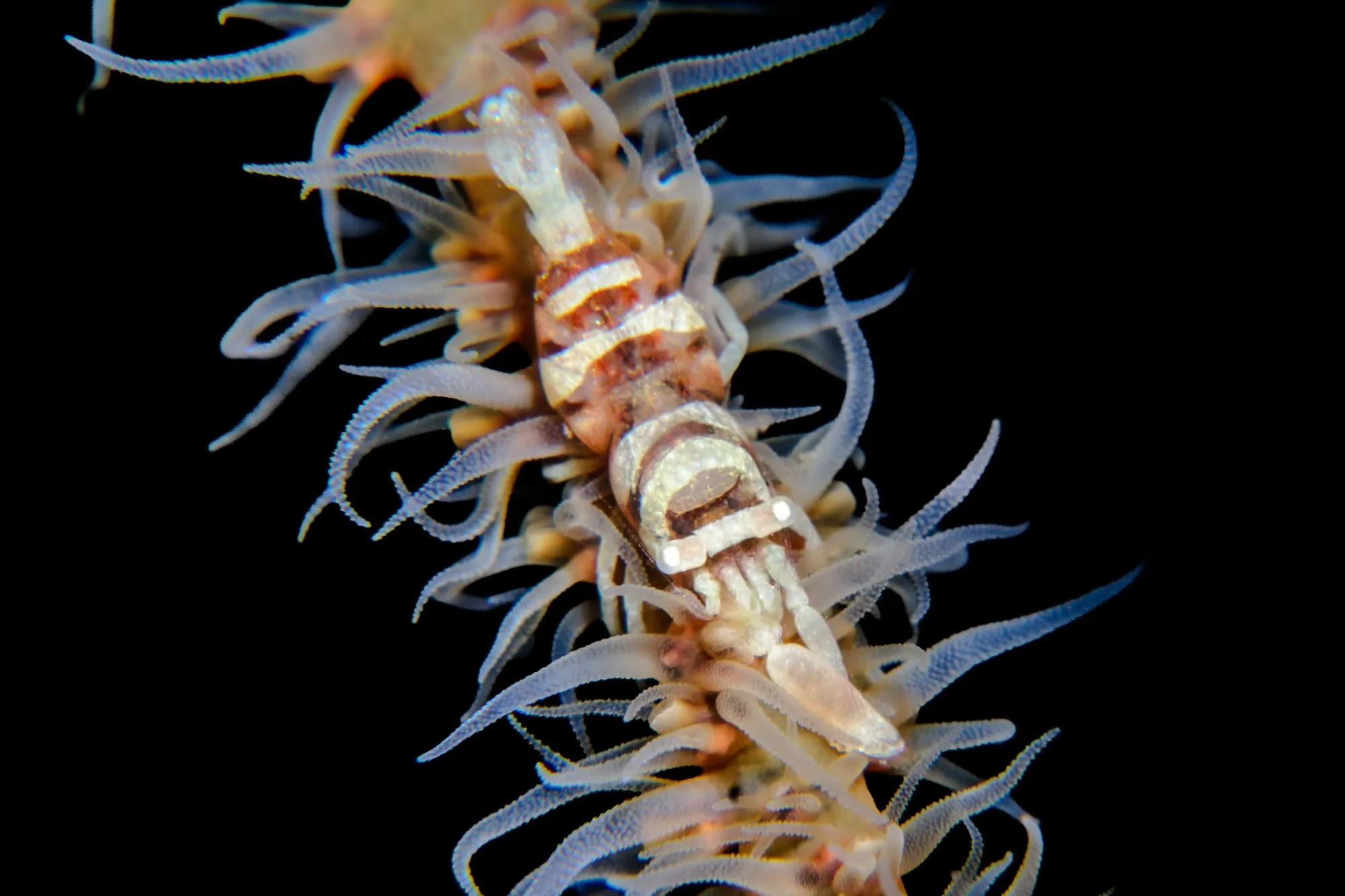
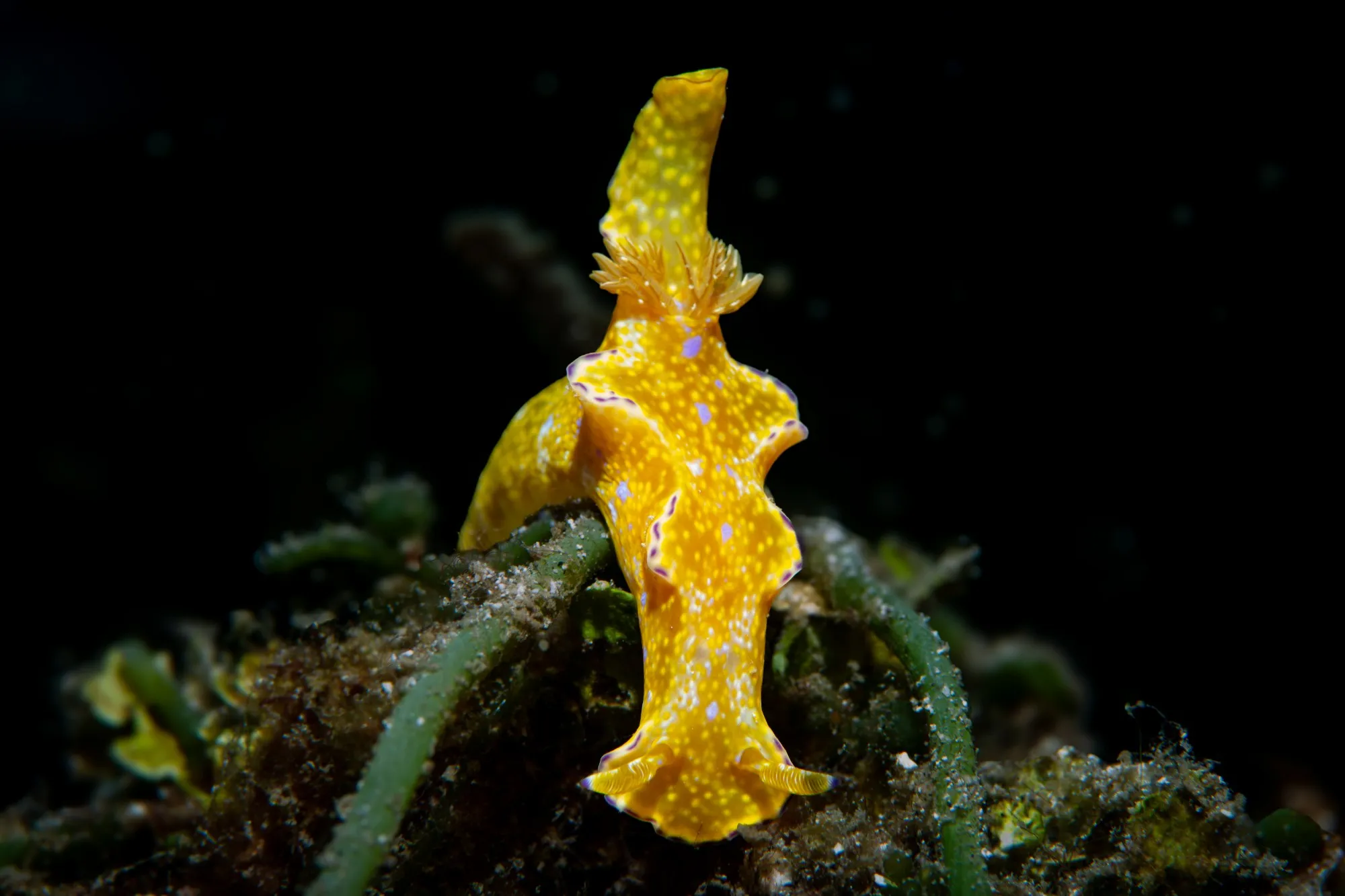
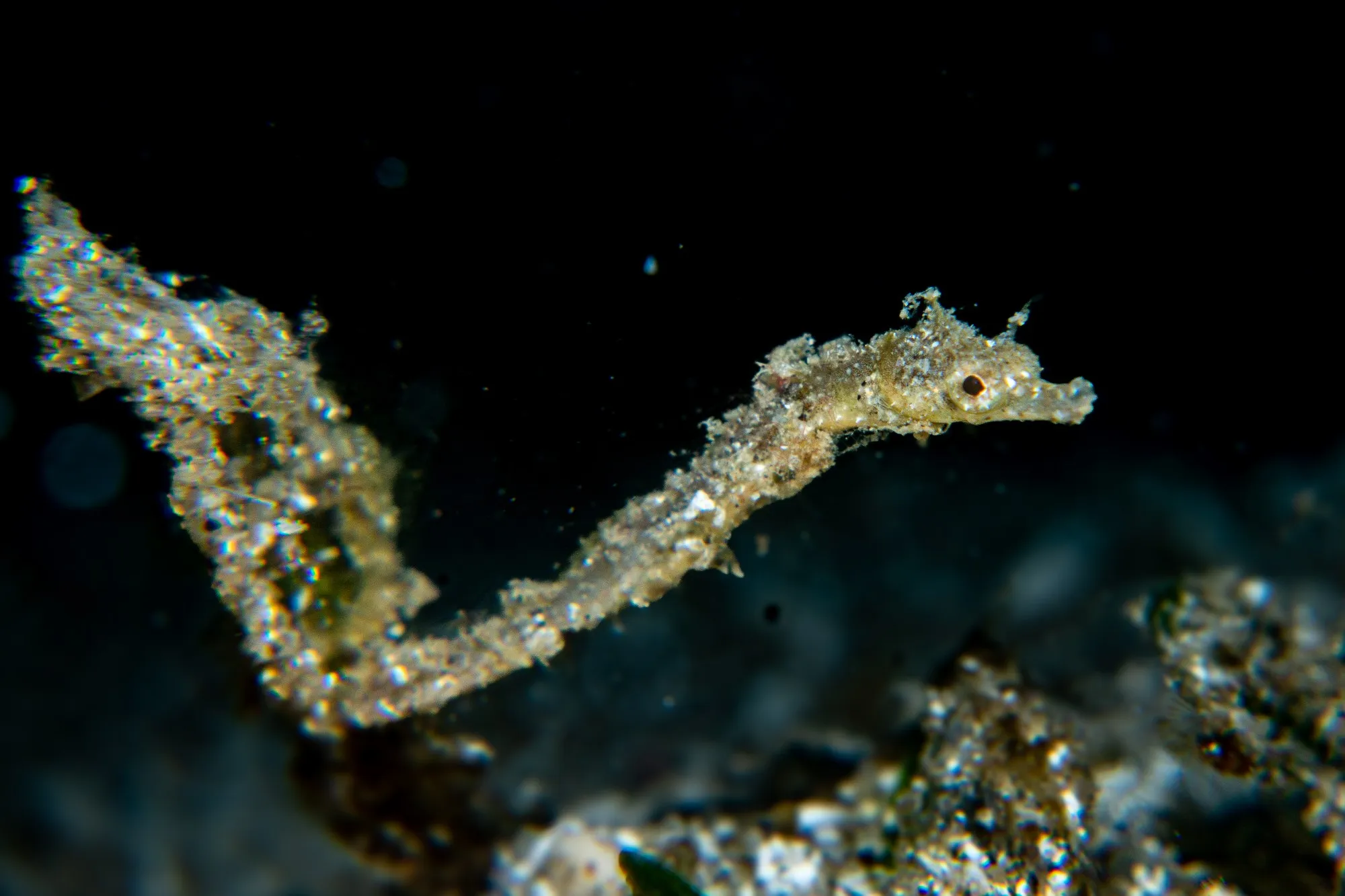
That’s it: we’re in November, and the macro season has started again. The nudibranchs are out, the shrimps have moved back onto their whip corals, and the pipehorses are pretending to be bits of seaweed again. Photographers, they’re waiting for you.
Why now is the best time
- Fewer people on the boat. The busy season is behind us. Smaller groups mean more time on each subject, nobody kicking up the sand behind you, and a guide who can stay with you.
- We choose the best sites. With quieter boats, we can plan the dives around what you want to shoot, not around a crowd. Macro-dedicated dives on the Gili reefs, or a muck dive on the Lombok coast.
- Calm, patient diving. Macro is slow diving: a few square metres, a long look, the right angle. That’s exactly how we like to dive at this time of year.
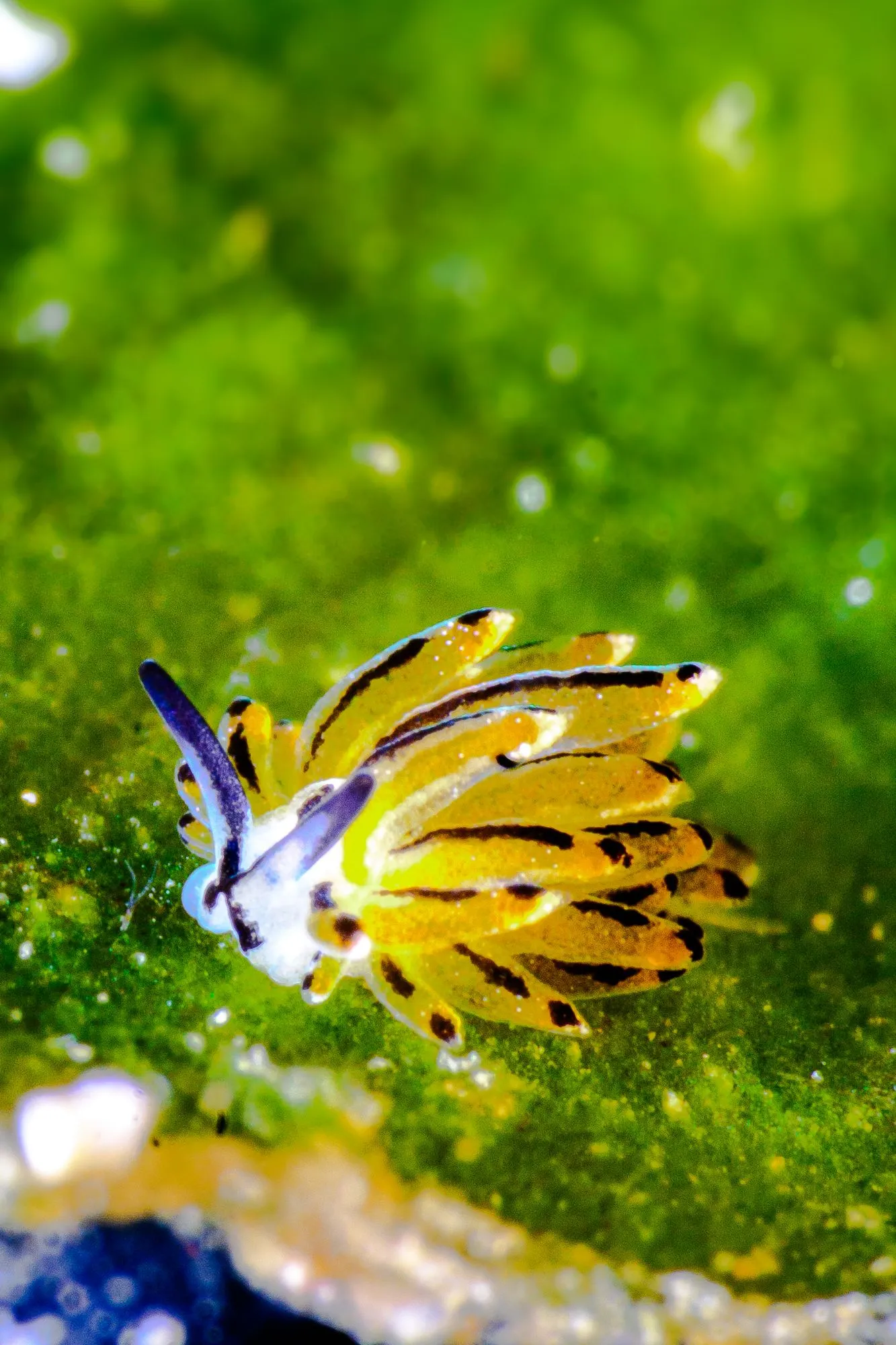
- The subjects are here. Frogfish, seahorses, ghost pipefish, nudibranchs by the dozen, shrimps on every whip coral. On the Lombok muck sites, add flamboyant cuttlefish and mimic octopus.
Where we take you
- Hans Reef, on the north-eastern tip of Gili Air, is our macro capital: a sandy slope dotted with pinnacles, full of critters.
- The Lombok muck sites, like Mentigi Bay and Kecinan Seahorse Bay. Sheltered from the current, so the subjects stay put and you can take your time. Good buoyancy is a must: the sand lifts easily.
- The afternoon boat, quieter, with warm light: perfect for macro-dedicated dives on the three Gili reefs.
Dive with Bibi, our in-house photographer
Our in-house photographer is also the boss of the dive centre: Bibi. He has been diving these reefs since 2011, and he is passionate about underwater photography. Put him on macro and he’ll find you pretty much anything you ask for. Have you ever been underwater with him? He has the eyes of a lynx: a pygmy seahorse no bigger than a fingernail, a shrimp hiding in a coral, a nudibranch the colour of the sponge it sits on.
And he doesn’t just find them, he knows how to shoot them: lighting, angles, backgrounds, how to approach without scaring the subject away. To see what he brings back from his dives, follow him on Instagram: @bibigili.
What we offer photographers
- Private photo-guiding. One-on-one dives tailored to what you want to shoot. We slow the dive down to your shutter speed.
- Muck dives on the Lombok coast. Ask us to plan a few muck dives into your stay: they’re the best way to fill your memory card with critters.
- The SSI Digital Underwater Photography course. Two days to understand your camera, your strobes and your composition, and to come home with photos you’re proud of.
Everything is on our underwater photographers page. Tell us what kit you’re bringing and what you’d like to shoot, and we’ll suggest a 2 to 3 day rotation to get the best out of it.
The critters are here. The boats are quiet. All that’s missing is you, and your camera.
Keep reading
Diving Gili Air in the rainy season: is it worth it?
Night diving on Gili Air: the reef after dark
Diving Gili Air month by month

How much does diving on Gili Air cost?
When is the best time to freedive on Gili Air?
Freediving in Indonesia: where to go, and for whom
A freediving training week on Gili Air

Freediving with turtles on Gili Air
The Indonesian Throughflow: the ocean current shaping every dive at the Gilis
