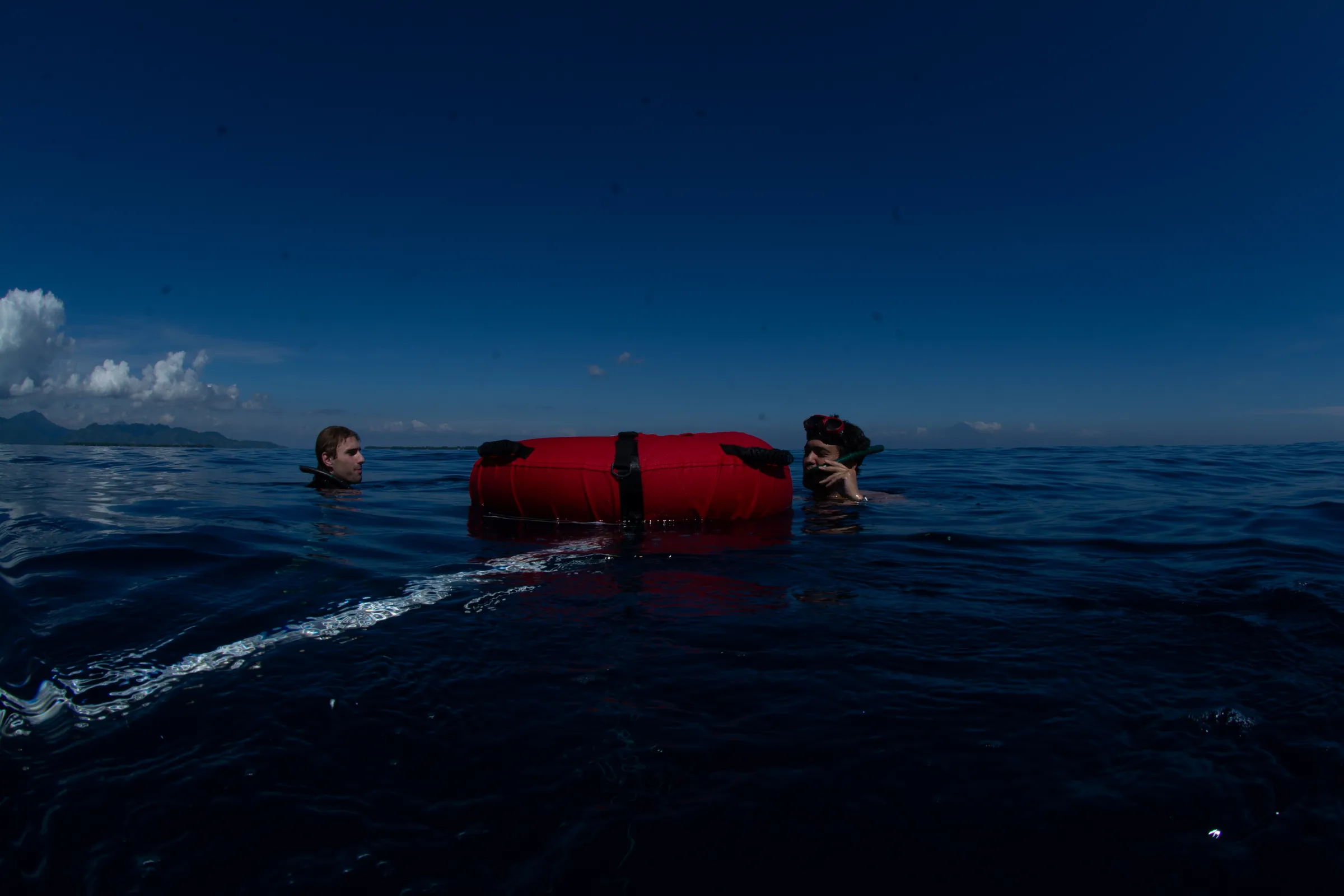
Indonesia is made of more than 17,000 islands, sits in the Coral Triangle and has warm water almost everywhere. For a freediver, that is a lot of choice. But the right spot depends on where you are in your freediving: learning the basics, training depth, or travelling to see big animals. Here is our honest map, from a team that freedives the Lombok Strait every day.
In short
- Learning or building depth calmly: the Gili Islands or Amed, in Bali.
- Big animals and stronger water: Nusa Penida and Komodo, once you are confident.
- The far-away dream: Raja Ampat, for reefs more than for training.
What makes a good freediving spot
Before naming places, the criteria. A good place to learn or train has deep water close to shore or a short boat ride away, calm surface conditions, warm water, decent visibility, and of course qualified instructors with proper line safety. Big animals and dramatic currents are wonderful, but they are a bonus for experienced freedivers, not what you want on your first breath-holds.
The Gili Islands (Lombok)
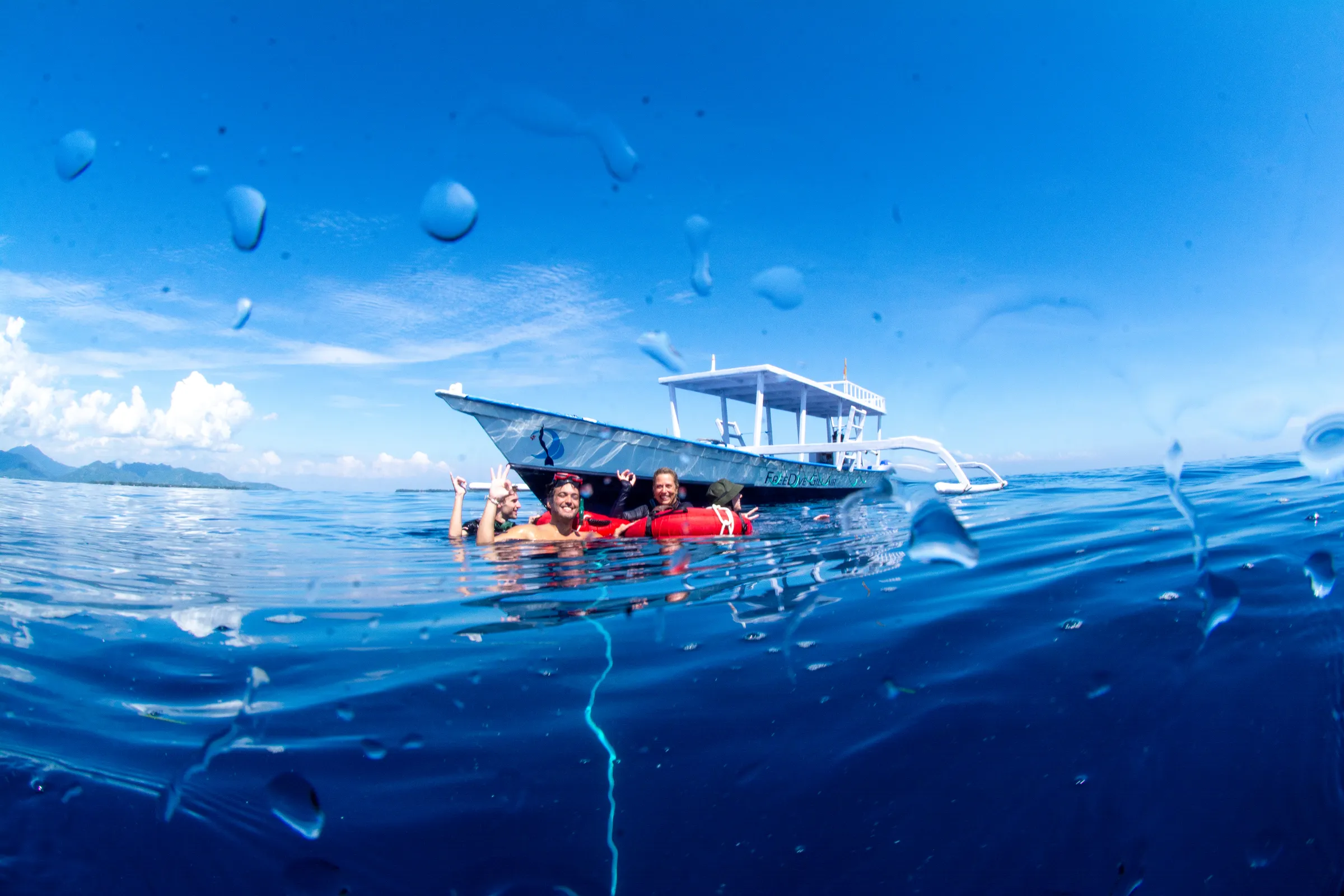
Gili Trawangan, Gili Meno and Gili Air sit at the edge of the Lombok Strait, with deep blue water a few minutes from the beach. Over the years the Gilis have become one of Indonesia’s best-known freediving areas.
Why we love it for learners: about 28°C all year, training lines at calm sites roughly five minutes from Gili Air, typically 20 metres of visibility or more, a pool for the first sessions, and turtles on almost every outing. Gili Air sits between lively Trawangan and sleepy Meno: quiet, with no motorised traffic, but with everything you need, which helps a lot when your sport is about calm and sleep. Our complete guide to freediving on Gili Air has all the details.
Getting there: a fast boat from Bali takes roughly 2 to 3 hours. See how to get to Gili Air from Bali.
Amed and Tulamben (northeast Bali)
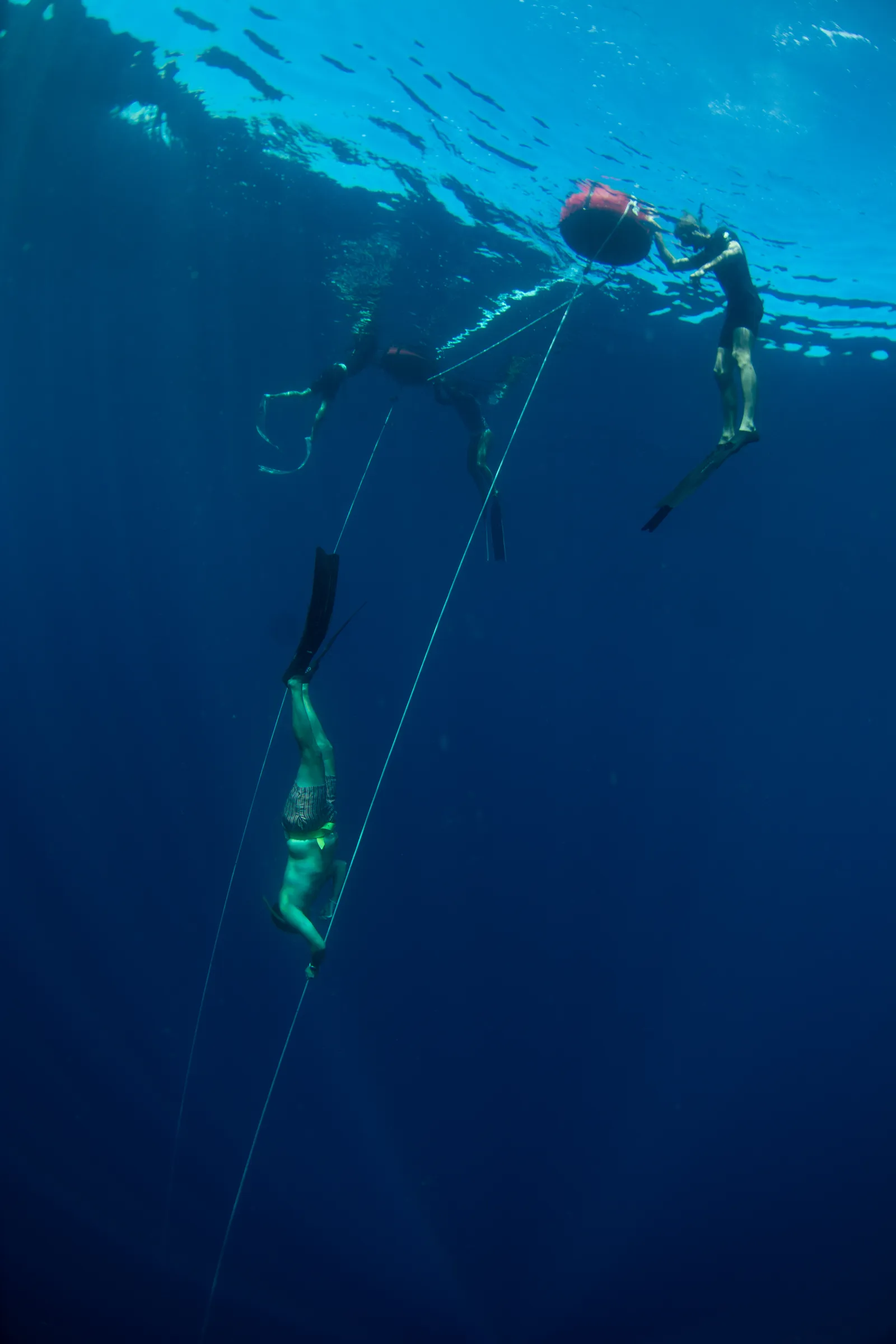
A long-standing freediving hub on Bali’s quieter east coast, with deep water close to the shore, black-sand beaches, and the famous USAT Liberty wreck at Tulamben, lying in shallow water. A good choice if you want to stay on Bali, and a classic stop on a Bali–Gili trip.
Nusa Penida and Nusa Lembongan
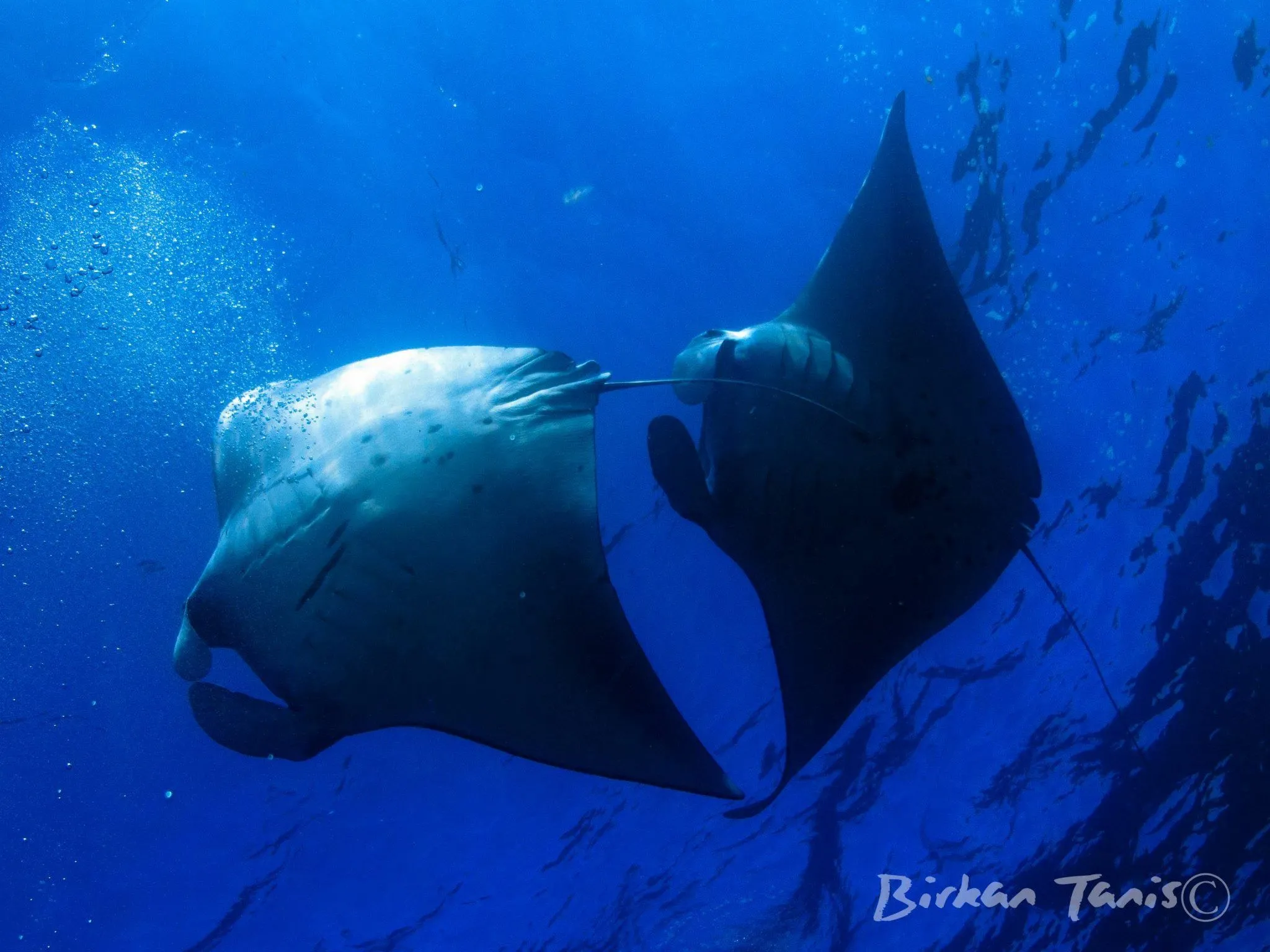
The headline here is manta rays, and in season the chance of mola mola. The trade-off: stronger currents, swell on exposed sites, and sometimes noticeably colder water when upwellings push in. Wonderful for confident, certified freedivers with a good guide; less relaxing for a first course. Our Gili vs Nusa Penida vs Komodo comparison covers the differences for divers.

Komodo
Spectacular reefs, mantas and big fish, usually explored by boat or liveaboard. The currents can be powerful, which makes Komodo a destination for experienced freedivers who come for the ocean, not for line training.

Raja Ampat
Probably the richest reefs on the planet, far east in West Papua. Long and costly to reach, and mostly organised around liveaboards and remote resorts. Go for the reef life on one breath, not to learn.
So, where should you start?
If you are new to freediving, start where the conditions make it easy to relax: warm, calm water, short boat rides, and a team that adapts to your ears and your pace. That is exactly why we built the Freedive Gili Air programmes here. Plenty of travellers learn on the Gilis, then carry their certification to Nusa Penida or Komodo to freedive with mantas.
Still unsure whether it is for you? Read our honest answer to is freediving for me?, or check the best time to freedive Gili Air. And if you are planning an Indonesia trip, message us on WhatsApp or at freedivegiliair@gmail.com: we are happy to help you place a few days on the line in your itinerary.
Keep reading

Before you dive again: be honest with yourself, be fair to your group
Diving Gili Air in the rainy season: is it worth it?
When is the best time to freedive on Gili Air?
Is freediving for me? An honest answer
A freediving training week on Gili Air
Freediving or scuba diving: which one is for you?
Diving Gili Air month by month

Gili Islands vs Nusa Penida vs Komodo — where should you dive?

Planning your Gili Air dive trip
