
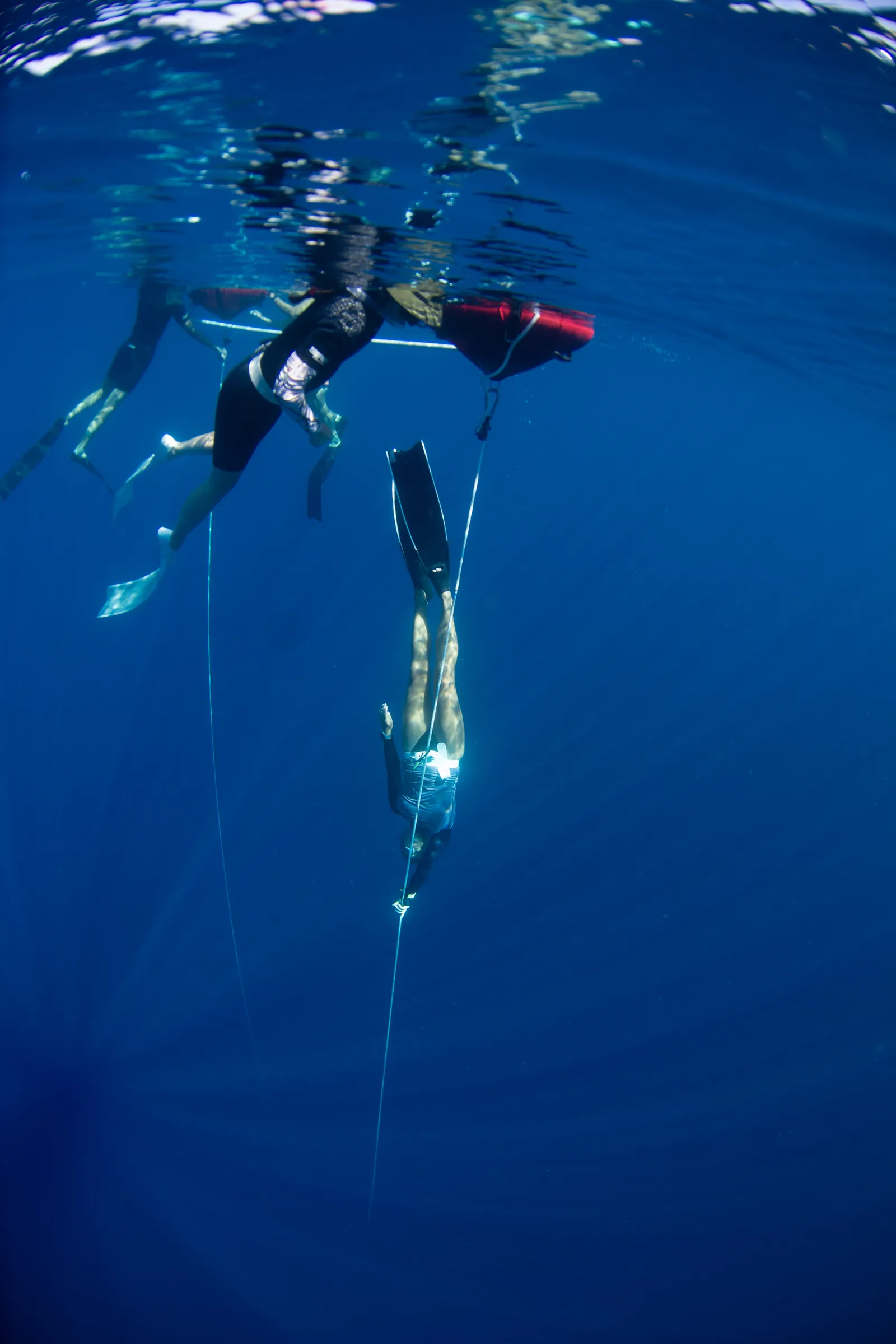
You have learned the Frenzel, your ears clear on the way to 15 or 20 metres, and diving feels good. Then, a few metres deeper, the ears stop clearing again. This is normal, and it is not the end of the road. Deeper freediving simply asks for more refined equalisation. This article follows on from our beginner’s guide to ears and the Frenzel; if you have not read it yet, start there.
In short
- Hands-free (BTV) opens the ear tubes with muscles alone, no nose pinch. Some people can do it naturally, most need patient practice.
- Mouthfill stores air in the mouth before the lungs get too compressed, then uses it with the Frenzel for the rest of the descent.
- Reverse packing sips a tiny amount of air up from the lungs at depth. It leaves less margin for error and belongs with an instructor.
Why the Frenzel runs out of air
The Frenzel uses the air in your mouth and nose, pushed by the tongue. That air has to come from somewhere: your lungs. As you go deeper, the water pressure squeezes your lungs smaller and smaller. At some point, the air left in them is so compressed that you can no longer easily bring it up into your mouth. Freediving coaches often link this to your residual volume, the air that always stays in your lungs after a full exhale. For many people it is reached somewhere around 30 metres, sometimes earlier, depending on lung size, flexibility and training.
Below that point, the Frenzel alone often stops working. That is why deeper freedivers learn other tools.
Hands-free equalisation (BTV)
BTV comes from the French béance tubaire volontaire, which means “voluntary opening of the tubes”. In English it is also called VTO (voluntary tubal opening) or simply hands-free. Instead of pushing air into the ears, you open the Eustachian tubes with the muscles of the soft palate and throat, a bit like the very start of a yawn, with the jaw moving slightly forward and down. The pressure then balances by itself.
Why bother? You keep both hands free for streamlining or pulling on the line, and the movement is very gentle.
The honest truth: a few people can do it from the start, many need weeks or months of practice, and some never get it fully reliable. That is fine. Hands-free is a nice extra, not a requirement.
A dry-land check: in a quiet room, start a yawn slowly, with your mouth closed. Many people hear a soft click or a small “crackle” in the ears, and their own voice sounds louder inside their head for a moment. That is the tubes opening. Practise gently, a few times a day, without forcing.
The mouthfill
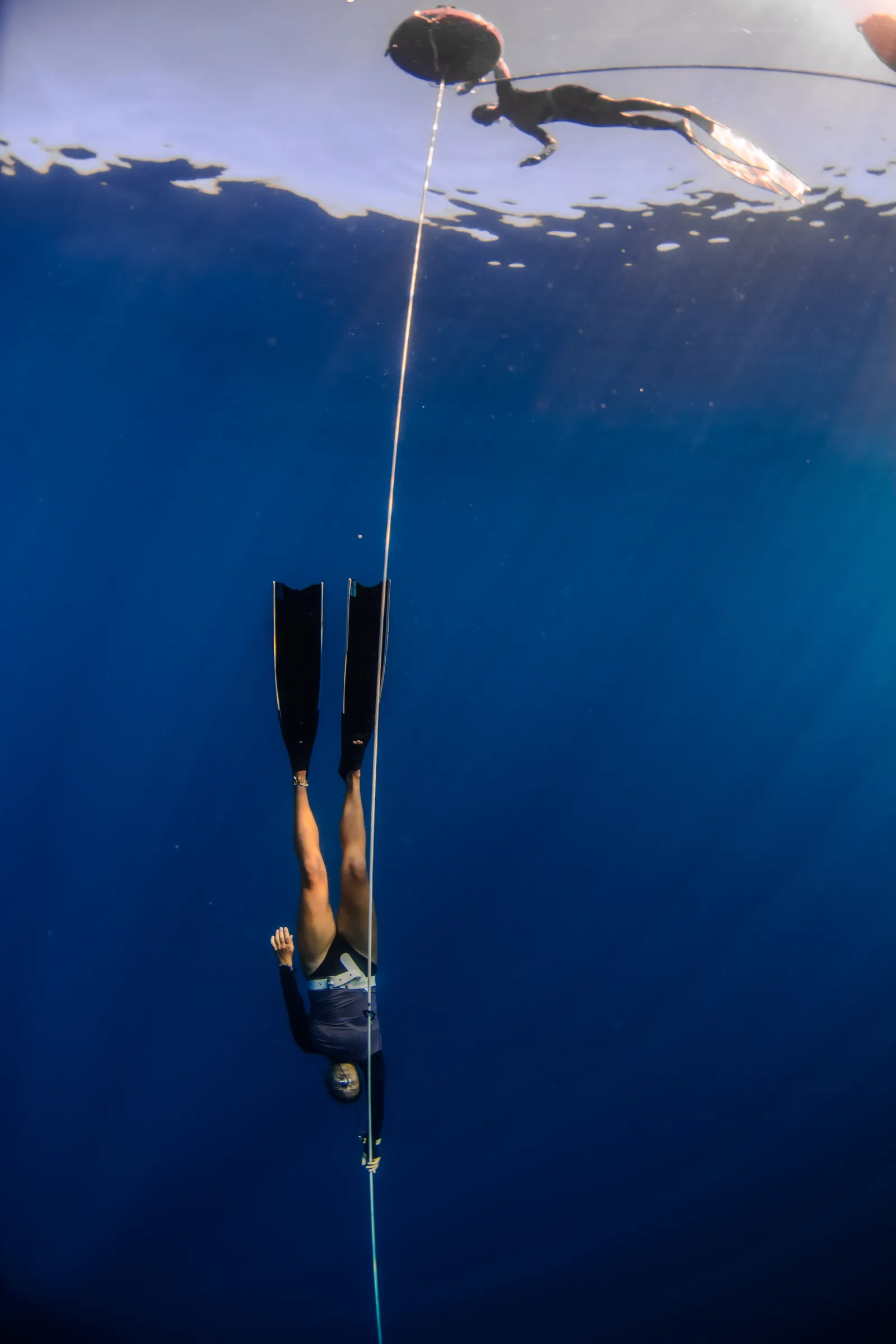
The mouthfill is the most common technique for deep equalisation. Before your lungs reach that difficult point, you bring a mouthful of air up from the lungs and lock it in your mouth and cheeks. You then close the back of the throat so this air cannot fall back into the lungs, and you keep equalising with the Frenzel using only that stored air.
A few practical points:
- The timing matters. Taken too shallow, the air in the mouth compresses and may not last. Taken too deep, it becomes hard to fill. Many divers take it somewhere between 20 and 30 metres, but the right depth is personal and comes from coaching.
- The cheeks stay soft. A relaxed mouth holds the air better than tense cheeks.
- The common mistake is letting the stored air slip back into the lungs. That is a technique issue, and it improves with drills.
A dry-land drill: take a small breath, fill your cheeks gently, close the throat and pinch your nose. Now do slow Frenzel movements with the tongue while keeping the cheeks puffed. Then try breathing out fully first and repeat, so you feel how little air you need.
Reverse packing
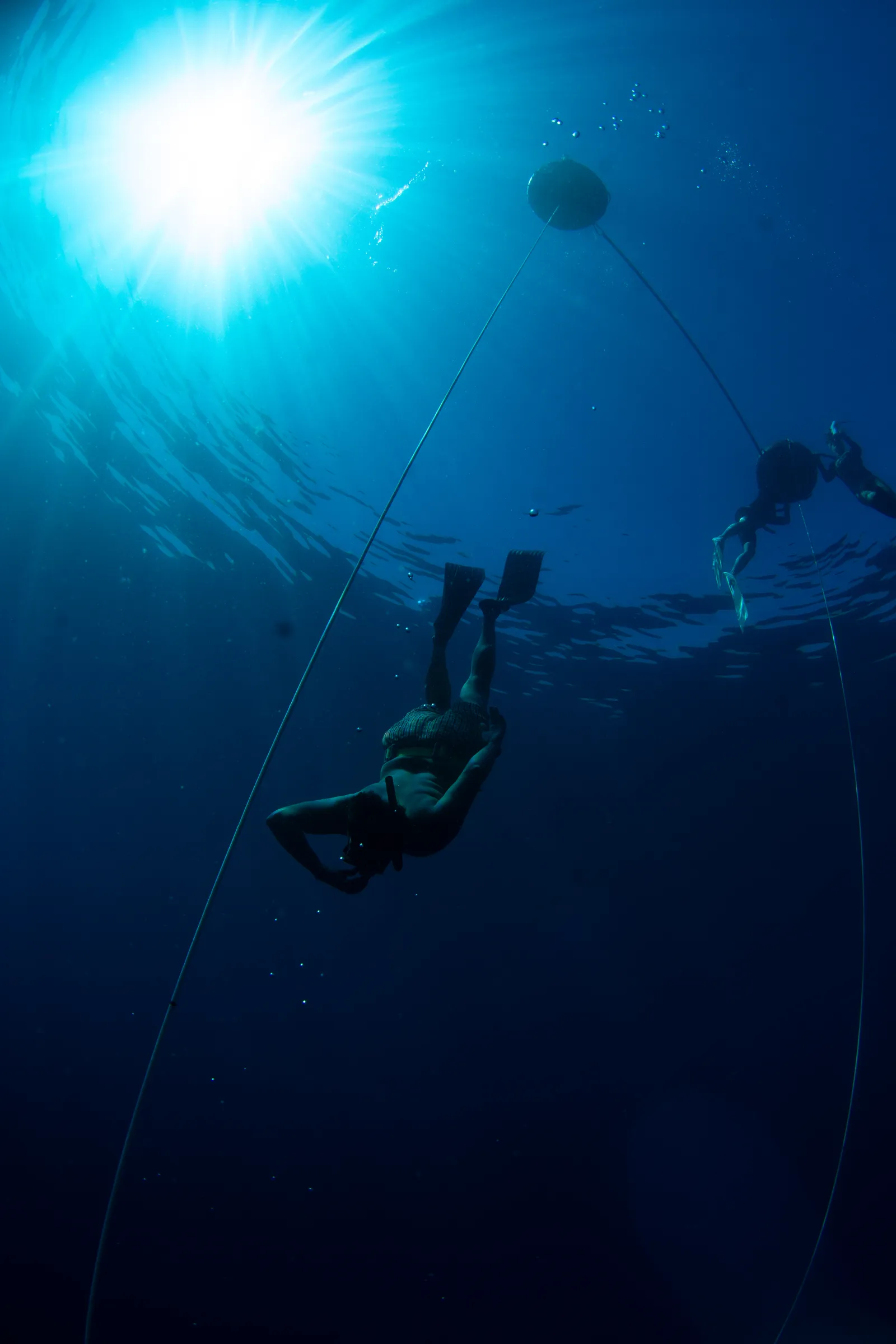
Reverse packing brings a very small amount of air up from the lungs into the mouth at depth, when the lungs are already compressed. Some deep divers use it to top up their mouthfill or to keep equalising when the mouthfill is gone.
This is where we want to be clear. Freediving coaches describe it as having less margin for error than the mouthfill: large or forceful sips put strain on the airways and lungs and can lead to injury, such as a lung squeeze. It is a small, relaxed movement, taught step by step in a course or a coaching session, never something to copy from a video and try at depth alone.
Rules that do not change
- Never force. If an ear does not clear, stop, go up a little and try again gently. Pain means stop.
- Equalise early and often, from the very first metre.
- No diving with a cold or blocked sinuses. If ear problems keep coming back, see a doctor, ideally one who knows diving.
- Ears are not the only limit. Being able to equalise deeper does not mean your breath-hold is ready for it. Depth comes slowly, within your certification.
- Always with a buddy, on a line, with someone watching from the surface. Read our freediving safety guide to see why.
How we teach it on Gili Air
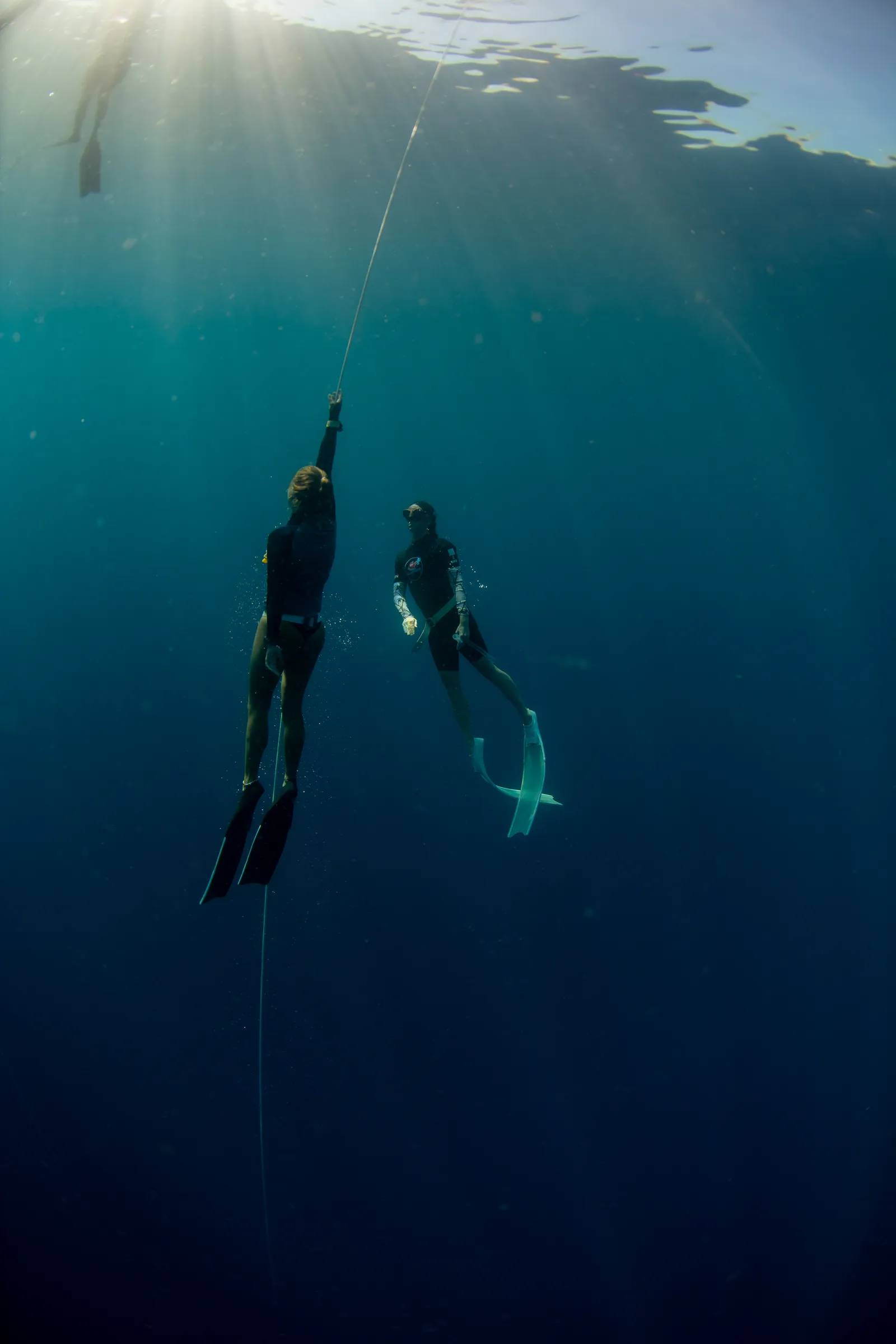
These skills are taught in order, never all at once. SSI Freediving Level 2 covers Advanced Frenzel and reverse pack equalisation over three days, with dives to 30 metres (minimum age 16). If equalisation is your personal wall, a Freediving Coaching Session (IDR 900,000) is built around it: Frenzel, mouthfill and hands-free, with our resident SSI Freediving Instructor Choky finding the depth where it breaks down and rebuilding from there. And once you know the technique, Line Training gives you the safe repetitions to make it automatic.
Questions about your ears? Message us on WhatsApp or at freedivegiliair@gmail.com.
Keep reading
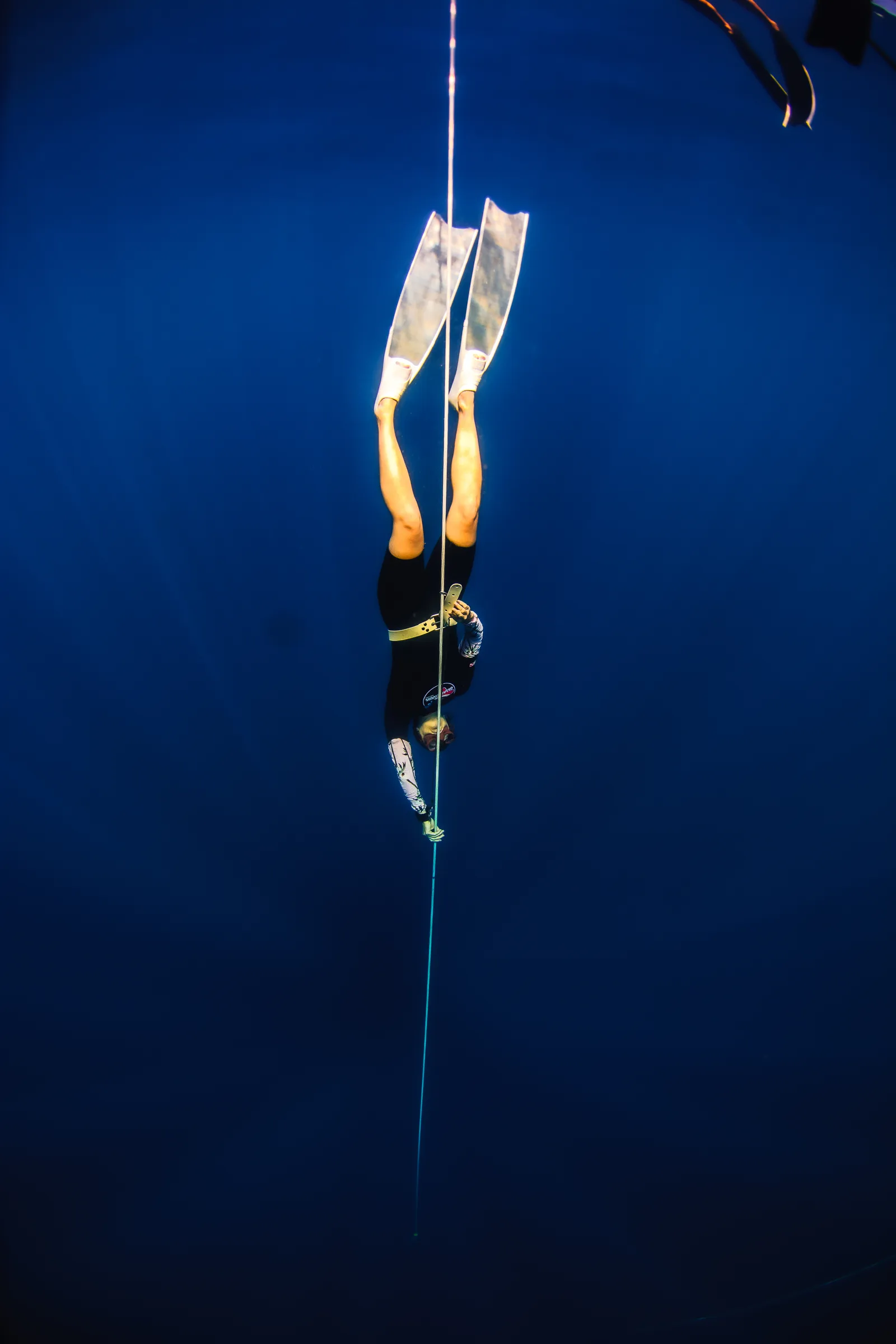
Ears and freediving: why Frenzel changes everything
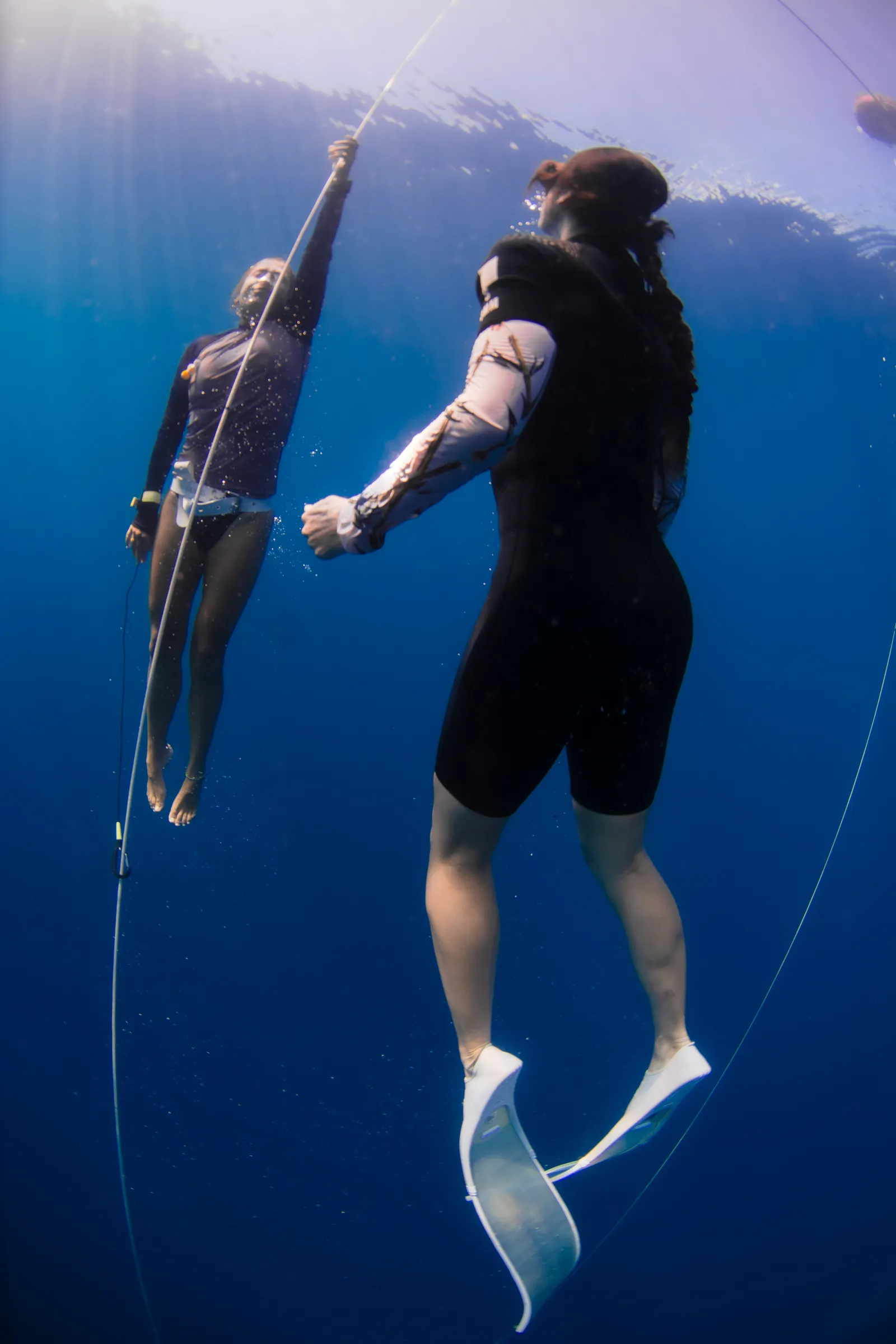
Freediving safety: why you never dive alone
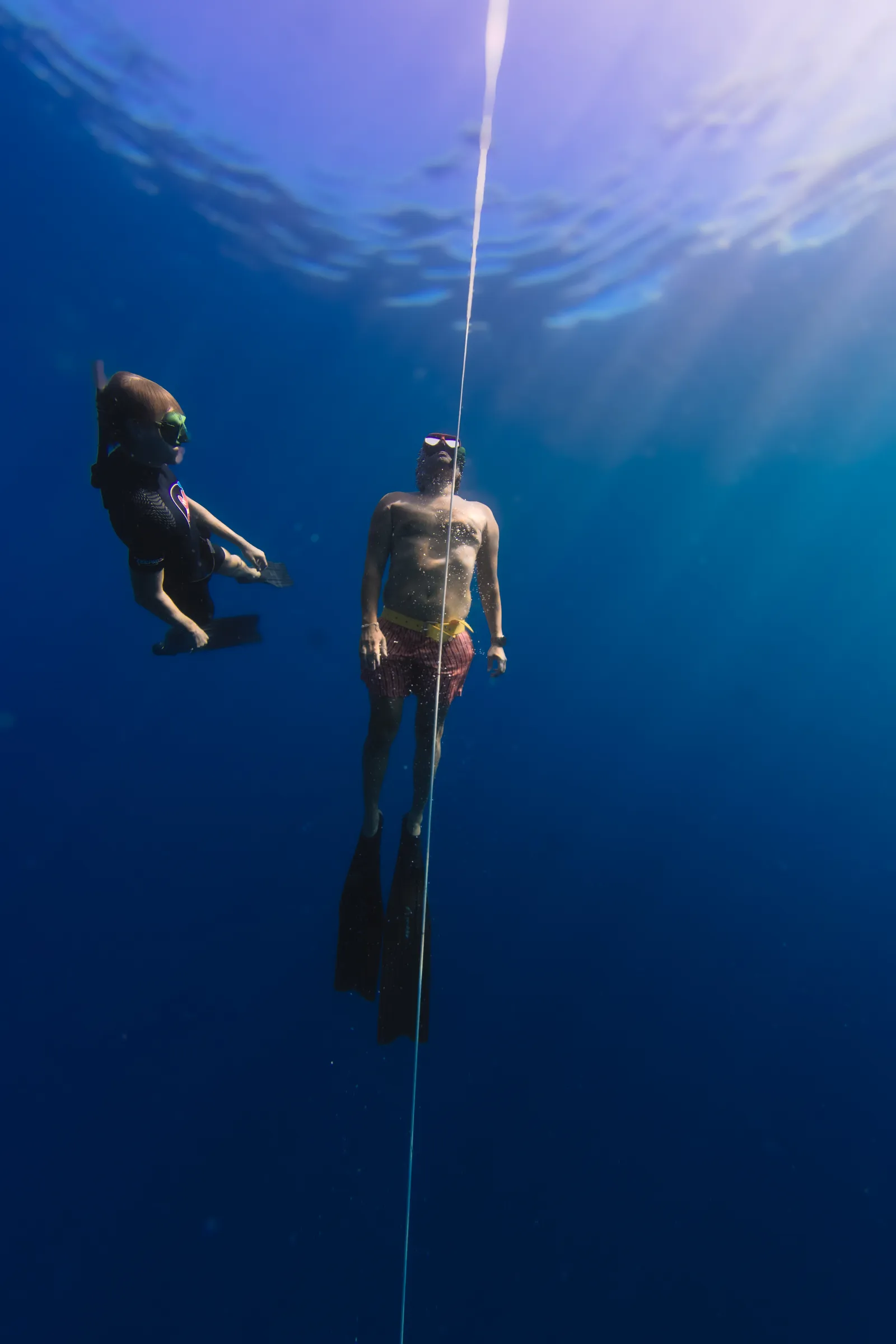
Is freediving for me? An honest answer
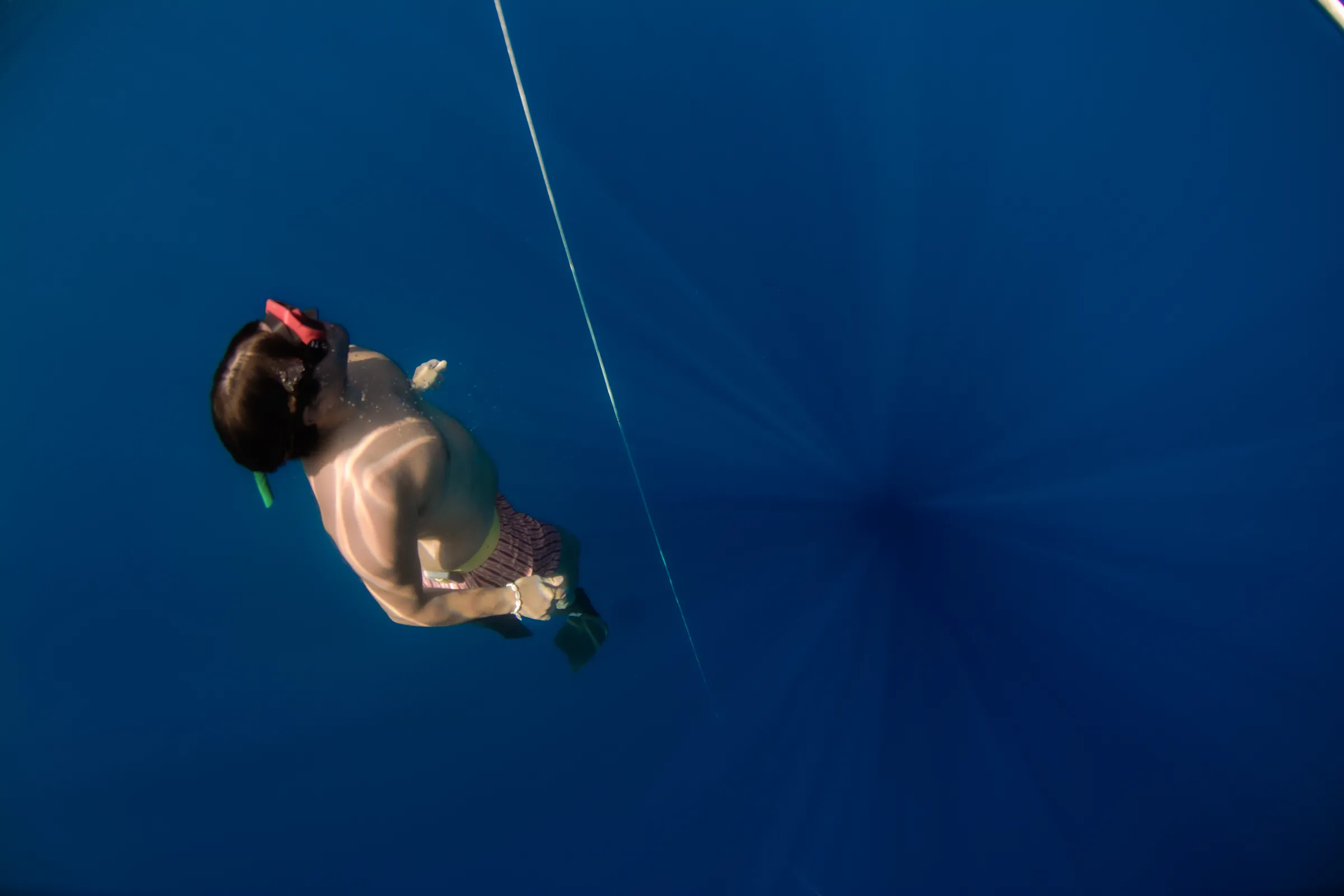
Your first freediving trial on Gili Air, step by step
Freediving on Gili Air: the complete guide
Freediving in Indonesia: where to go, and for whom
A freediving training week on Gili Air
Freediving or scuba diving: which one is for you?

Freediving with turtles on Gili Air
